NJ City Agrees To Raise Christian Flag After Denying Permit: News Release from Liberty Counsel

Before the letter, parade organizers had consistently included a ceremonial raising of the Christian flag at city hall for their annual parade since 1979. However, in August 2025 the city unlawfully denied the permit citing violation of the Establishment Clause and that the decades-long practice of granting their permit was an “administrative error.” Now, the Jersey City officials have agreed to let organizers raise the Christian Flag on September 8, 2026, for their annual Children of Faith Parade.
In the letter, Liberty Counsel informed city officials about its unanimous 2022 victory in Shurtleff v. City of Boston, a case where Boston officials denied raising the Christian flag in an open forum. In that case, the U.S. Supreme Court ruled cities that open their flagpoles to the public cannot selectively exclude religious viewpoints when they allow other private groups to speak. Liberty Counsel noted that Jersey City’s flag program had previously permitted other ideological and religious flags, including for the “Jersey City LGBTQ+ Pride Festival;” the “Independence Day of Pakistan Flag Raising Ceremony” for the Muslim Council North America and Muslim Federation of New Jersey; and the “3rd Annual Palestine Flag Raising Ceremony,” among others.

In Shurtleff, the High Court ruled 9-0 that raising the Christian flag under Boston’s public flag-raising program did not amount to government speech or violate the Establishment Clause since the city had opened its flagpole to private speech and was not selecting or communicating the message. Rather the High Court ruled, denying the Christian flag amounted to unequal treatment and was unconstitutional viewpoint discrimination.
Since Jersey City’s flag program is almost identical to Boston’s, Liberty Counsel had requested Jersey City approve the flag-raising permit for the 2026 parade to avoid the city violating the First Amendment.
Liberty Counsel’s Founder and Chairman Mat Staver said, “We commend Jersey City officials for making the right decision to grant the Christian flag-raising permit for the Children of Faith Parade. Jersey City had stated that raising the Christian flag in their public forum would violate the Establishment Clause, but it does not. The opposite is true. Denying raising the Christian flag in a public forum is the actual First Amendment violation. The clear message from the U.S. Supreme Court is that government cannot favor one viewpoint and censor another in a public forum. Municipalities like Jersey City can legally permit both secular and religious commemorative emblems when they open their flagpoles to public expression.”
For media interviews, please email media@LC.org.
Happy Flag Day

From the White House:
BY THE PRESIDENT OF THE UNITED STATES OF AMERICA
A PROCLAMATION
On June 14, 1777, the delegates of the Second Continental Congress adopted a resolution declaring “that the flag of the United States be thirteen stripes, alternate red and white; that the union be thirteen stars, white in a blue field, representing a new Constellation.” In the 250th year of our glorious Republic, this Flag Day celebrates the American People, whose enduring spirit allows our beloved and timeless tricolor standard to fly as the greatest symbol of freedom, democracy, and sovereign strength the world has ever known.
At its inception, the Stars and Stripes symbolized America’s fundamental precepts of liberty, justice, and dependence on Almighty God. Our Nation’s official banner and the principles that propelled our Founding Fathers to boldly undertake the most consequential act of self-governance of all time have withstood the test of time. The flag is a physical representation of our storied past, shared sacrifice, common heritage, and divine destiny. From the frozen ground of Valley Forge to the blood-soaked field of Gettysburg; from the triumphant beaches of Normandy to the desolate face of the Moon; and from the granite steps of the Lincoln Memorial to the heart of every patriot who continues to define American Excellence to this day — wherever our beautiful flag flies, America’s greatness follows. After nearly two and a half centuries, through every tragedy and triumph, Old Glory remains the strongest beacon of sovereignty and hope the world has ever known, thanks to the devoted patriots of the past who made it so — and it is up to us to keep her flying proudly for generations to come.
Our beautiful flag is a global ensign of America’s indominable spirit, matchless power, and endless resolve to achieve a more perfect Union. This sacred symbol of the American people, carried by generations with incredible courage and unshakable faith in the promise of our Nation, deserves our deepest admiration, protection, and respect. Last year, I signed an Executive Order to preserve the dignity of our flag by enforcing accountability for acts of desecration tied to violence and lawlessness. We also authorized the revocation of visas, residency, and naturalization for foreign nationals who desecrate the banner under which millions of American patriots have fought and died. As President, I will always wield the full power of my office in defense of our flag’s sacred honor, and I will never rest in my commitment to ensure that the proudest emblem of liberty is forever treated with the reverence it has so dearly earned.
Next month, America will celebrate the most important milestone in our history — 250 glorious years of blessed Independence — and the Red, White, and Blue will preside over jubilant commemorations from sea to shining sea. It will billow atop flagpoles in sprawling cities and on neighborhood porches in small towns; it will fly over beaches, stadiums, parks, iconic landmarks, and military bases. Our flag will wave in the hands of children at parades and festivals and flap solemnly as a sentinel over hallowed cemeteries of the fallen. On Flag Day, during National Flag Week, and throughout the summer of this historic year, may our majestic flag soar as a triumphant symbol of all the American people have achieved and serve as a shining herald of the new Golden Age that lies before us.
To commemorate the adoption of our flag, the Congress, by joint resolution approved August 3, 1949, as amended (63 Stat. 492), designated June 14 of each year as “Flag Day” and requested that the President issue an annual proclamation calling for its observance and for the display of the flag of the United States on all Federal Government buildings. The Congress also requested, by joint resolution approved June 9, 1966, as amended (80 Stat. 194), that the President issue annually a proclamation designating the week in which June 14 occurs as “National Flag Week” and calling upon all citizens of the United States to display the flag during that week.
NOW, THEREFORE, I, DONALD J. TRUMP, President of the United States of America, do hereby proclaim June 14, 2026, as Flag Day and the week starting June 14, 2026, as National Flag Week. I direct the appropriate officials to display the flag on all Federal Government buildings during this week, and I urge all Americans to observe Flag Day and National Flag Week by displaying the flag. I also encourage the people of the United States to proudly observe with all due ceremony those days from Flag Day through Independence Day, set aside by the Congress (89 Stat. 211), as a time to honor America, to celebrate our heritage in public gatherings and activities, and to publicly recite the Pledge of Allegiance to the Flag of the United States of America.
IN WITNESS WHEREOF, I have hereunto set my hand this twelfth day of June, in the year of our Lord two thousand twenty-six, and of the Independence of the United States of America the two hundred and fiftieth.
DONALD J. TRUMP

Camp Constitution’s Annual Family Camp One Month Away. Spaces are Still Available
Camp Constitution 18th Annual Family Camp is one month away. It will be held at the Singing Hills Christian Camp https://www.singinghills.net/ Plainfield, NH. from Sunday July 12 to Friday July 17, 2026 We still have rooms available. We have to give Singing Hills a final headcount on July 3. So, if you are planning on attending, please let us know.
Returning instructors include Pastor David Whitney of the Institute on the Constitution, Catherine White of The Constitution Decoded, Alex Newman, author and host of the Sentinel Report, Kurt Hyde, retired U.S. Air Force Lt, Col, and Rev. Steve Craft, Camp Constitution’s chaplain.

Guest instructors include Julie Wilkinson who played in the movie “”UnPlanned: The Abby Johnson Story.” In addition to the classes, the camp will offer marksmanship courses, martial arts, hiking, basketball, volleyball, wiffleball, and optional field trip and swimming, chess, gaga and corn hole tournaments. Campers and staff end the day with an evening campfire.
Our theme: Celebrating our nation’s 250th Birthday
Camp Constitution’s annual camp is a family camp open to entire families, unaccompanied minors, and adults. The cost for the week which includes lodging, meals and class handouts is $300 for those 13 and over. $200. For campers 12 and under, and three and under with parents are free. A link to the camp registration: https://campconstitution.net/camp-registration/
Can’t attend but would like to help a worthy youngster or family attend camp? Please consider making a donation to Camp Constitution. Donations can be made via our PayPal account accessed from our website’s homepage https://campconstitution.net/ or by check payable to Camp Constitution and mailed to Camp Constitution C/O Hal Shurtleff 146 Powder Mill Rd. Alton, NH 03809.
For more information contact Hal Shurtleff (857) 498-1309 campconstitution1@gmail.com

A Letter to Youth by Youth: Freedom Lives or Dies with Us By Alise Uhl


My fellow young Americans, 85 years ago on December 7, 1941, our country was attacked on a lazy, peaceful day at Pearl Harbor. It dealt a devastating blow. One that could have knocked America to her knees. It did the opposite.
We took to the skies.
A select few of our young pilots were called upon to execute a top-secret counterattack on Japan. Doolittle’s Raid was practically a suicide mission.
Our country didn’t know it at the time, but they turned their eyes on those young men for justice.
And those pilots and bombardiers didn’t run. They didn’t hide. They didn’t buckle when they had already seen so much.
No.
They stepped forward.
They chose to give up the rest of their lives, give up marrying their sweethearts, and give up meeting their children so that American children could live, breathe, marry, and die in freedom.
Just a few generations later, those children are you and me.
If our nation now turned its eyes on us, could they trust us?
Loving our country and her people means more than basking in the freedom to say whatever we want. More than pushing for our generation to get its way because we are going to be the next ones to lead. More than wanting only “the fun part of freedom.”
Everyone should have freedom of speech. Every man and woman was born with that right. But will what we currently shout taste bitter in the mouths of our offspring, or will it be the anthem they sing as they teach their kids what freedom is?
Do those who mentored us have the assurance that the next generation is not simply waiting their turn to take political office for personal interests? Do they know that we won’t forget, trample over, take advantage of, or reverse the good they have accomplished?
Are we ready?
World War II was our last just war. Nearly a century ago. Our army mobilized only after Congress declared war on an attacking nation. If another country assaulted ours today, and Congress declared war, and the people demanded justice, would they get it?
When we look back to just one of the wars that shaped America, we realize the nation put herself into the hands of boys who were forced to become men. She put herself into the hands of young women who became nurses, stood behind those men, and helped many of them through their dying breaths.
Do we know what it is like to walk through a war memorial and truly honor those men and women who paid the ultimate price for freedom? To look back and silently promise them that their story, their lives, their deaths will not be forgotten?
This is not just history. This is our heritage. And when our heritage becomes a part of us, it refuses to become a relic of the past.
Are we willing to give more than a mere moment of silence to the same cause that our fathers were willing to fight and die for? To give our sweat, our tears, our fight, and, if it comes to it, our blood?
I don’t just speak of foreign wars and affairs or a power rising against us from without.
There is an enemy within. It is the crushing wave of false ideology, projected as truth, penetrating the young minds of our kids. It is the stifling of the God-fearing American spirit under the sweeping hail of propaganda.
I have testified at my state capitol for the same causes and worked in the same campaigns as older generations of patriots have. And I saw them stand. They left a legacy you and I still live in the wake of every day. Americans know what happened over the last six years in our schools, our hospitals, our churches, and even our homes because they fought for us to know. I interacted with ordinary people who chose to stand and paid for it dearly.
Some lost their livelihoods, their health, and some even their right to walk free. It began with one voice here, and another voice there. They alone risked what big government, big business, and people with power would bring down on them for their action. Yet, it was enough to inspire others to rise with them.
Because of them, Americans are now more informed, and therefore more equipped, to fight propaganda in our midst.
But, young people, are we?
It isn’t enough for one of our voices to be heard. It isn’t enough for one patriot to salute. We need a young generation of patriots who will salute. A people who together speak. A nation that falls on its knees in acknowledgment of the God of righteousness. Young citizens who hail the Constitution, its protection of our rights, and its checks and balances will rise up and say the pledge proudly as one nation under God. And never get over it.
One truth. One God. One more chance.
What our country thinks of these principles will alone determine the question of her greatness.
I know what it is like to be in the company of patriots. I have more rarely found it my honor to be in the company of young patriots.
The colors. They must be hoisted again. Not by the aged, patriotic, should-be-honored generations that have gone on before us.
No.
They must be passed on to and raised and upheld by our young, strong, responsible arms that will carry them for our children. Freedom isn’t free. Let it sober us. Those who fought for us have to know they can trust us. That we aren’t just progressing our way, but the way God, Designer of our liberty, gives us the responsibility to. Not just for ourselves, but for our posterity.
Freedom – it lives or dies with us.
We are the remnant.
By Alise Uhl, 18 years old, and a 2024 Camp Constitution attendee.
The Weekly Sam: Christianity Versus Islam

Because we live in such a highly secularized society, we cannot believe that America could ever become
involved in a religious war in this day and age. Yet ferocious religious wars have been going on all over the
place: in Northern Ireland, in Israel, in the Balkans, in Sudan, in India, in Kashmir, and in Russia. But
history is a very harsh taskmaster and refuses to let us Americans escape into our secular fantasies and
liberal hot houses for long. Thus, it is vitally important for us to reconnect with the human race’s never
ending history of religious struggle. That a group of Islamic terrorists, trained in a remote war-torn, famine
ridden, hell-hole in Asia, could organize the kind of mind-boggling attack against America that took place on
September 11, 2001, means that America is not only not exempt from history, but has been dragged
kicking and screaming back into the middle of it.
Back in 1588, Christopher Marlowe, master of historical drama, wrote his famous Tamburlaine 2. In it there
is a fascinating scene in which the Christian King Sigismund of Hungary and Orcanes, the Muslim King of
Natolia, both former enemies, decide to establish peace between them in order to join forces to defeat
Tamberlaine the Great, the cruel, pagan conqueror of Asia.
Both men confirm their commitment with an oath. King Sigismund vows:
“By Him that made the world and sav’d my soul,
The Son of God and issue of a maid,
Sweet Jesus Christ, I solemnly protest
And vow to keep this peace inviolable!”
King Orcanes vows:
“By sacred Mohamet, the friend of God,
Whose holy Alcoran remains with us,
Whose Glorious body, when he left the world,
Clos’d in a coffin mounted up the air,
And hung on stately Mecca’s temple-roof,
I swear to keep this truce inviolable!”
But as the story goes, it was King Sigismund who later broke the truce and was defeated and killed by the
Muslims.
While the history of the struggle between Christians and Muslims for control of Europe was for a time
settled after the Muslims were expelled from Spain in 1492, and driven back from the gates of Vienna to
Asia and Africa, the Islamic enclaves that remained in the Balkans led to the recent wars in Bosnia and
Kosovo. The Serbs had considered themselves as the Christian bulwark against further Islamic incursions
in Europe, and therefore could not understand why they were being bombed by fellow Europeans and
Americans.
You had to know history to understand what Bosnia and Kosovo were all about and what bin Laden’s men
were doing in the Balkans. That conflict proved that the war between Christianity and Islam has never
ended. Over the ages, it simply took on different forms. The rise of European power put a lid on Islamic
ambitions and the Muslim world became the backwater of history until the discovery of oil in the twentieth
century. But in the nineteenth century, the Islamic Barbary states of North Africa could still make trouble for
the Infidel. They took possession of American and European commercial vessels, held their crews for
ransom, and enslaved other Christians. Our first war after independence was fought during the Jefferson
administration against the Muslim pirates and kidnappers of Tripolitania. It is known in the history books as
the Barbary War, in which U.S. Marines staged their first invasion of foreign soil. Hence, the Marine
anthem: “From the halls of Montezuma to the shores of Tripoli.”
In order to finally put an end to the piracy and barbarism coming out of North Africa, France decided to take
over Algeria. During the 1830s and 1840s, the French imposed their rule over the territory, encouraging
Europeans to settle there. The result was a flourishing French colony and an end to Barbary piracy. France
maintained order in North Africa until the end of World War II, when the anti-colonialist movement got
underway. Both liberals and communists joined in forcing the European powers to give up their colonies.
In Algeria, however, over a million Europeans had settled in the territory and the coastal departements
were considered an integral part of France. However, when Charles de Gaulle gained power at the height
of the Algerian uprising, he decided that France should quit Algeria because the Moslems could never
become true Frenchmen. And so France abandoned Algeria, and a million Europeans took to the boats.
Today, the invasion has been reversed. Five million Muslims, mostly Algerians, live in France. They make
up ten percent of the population and are part of the resurgent Islamic power in Europe. Christianity is now
so weak in France that one wonders if it is capable of resisting the assumption of Islamic power.
We have been told by our leaders and the media that we are not at war against the Islamic religion. We
are at war against terrorism. But what they all prefer not to recognize is that the spiritual power behind that
terrorism, the power that drives otherwise intelligent human beings to undertake suicidal missions against
the infidel is the religion of Islam. Of course, there are millions of Muslims who just want to lead normal
lives. Unfortunately, after September 11, 2001, nothing is “normal” anymore.
In an alarming article in the November issue of Commentary magazine, Daniel Pipes contends that
Islamist militants are serious about their plan to conquer America. He writes:
“The first missionaries for militant Islam, or Islamism, who arrived here from abroad in the
1920’s, unblushingly declared, “Our plan is, we are going to conquer America.”
The audacity of such statements hardly went unnoticed at the time, including by Christians who
cherished their own missionizing hopes. As a 1922 newspaper commentary put it:
“To the millions of American Christians who have so long looked eargerly
forward to the time the cross shall be supreme in every land and the people
of the whole world shall have become the followers of Christ, the plan to win
the continent to the path of the ‘infidel Turk’ will seem a thing unbelievable.
But there is no doubt about its being pressed with all the fanatical zeal for
which the Mohammedans are noted. Pipes writes further:
“As a teacher at an Islamic school in Jersey City, near New York, explains, the “short-term
goal is to introduce Islam. In the long term, we must save American society.” Step by step,
writes a Pakistan-born professor of economics, by offering “an alternative model” to
Americans, Muslims can transform what Ismail Al-Faruqi referred to as “the unfortunate
realities of North America” into something acceptable in God’s eyes.”
The irony in all of this is stunning. For years the Christian right has been trying to get Americans to live
godly lives, but with very limited success. The fact that 85% of American parents put their children in pagan
public schools is an indication of how strong our liberal secular culture is. It controls the curriculum in our
schools and universities. It controls most of the print media, the electronic media, and most of what comes
out of Hollywood. And American schools are now teaching American children all about Islam. While the
Bible has been eliminated from the classroom, apparently the Koran hasn’t. How else can you teach about
Islam?
Recently, the Reverend Franklin Graham, president of Samaritan’s Purse, a Christian relief agency, called
Islam “wicked and violent.” He said, “I don’t believe this is a wonderful, peaceful religion. When you read
the Koran and you read the verses from the Koran, it instructs the killing of the infidel, for those that are
non-Muslim.”
As the son of Billy Graham, Franklin is the designated successor to his father’s longtime evangelical
ministry. He delivered the benediction at Bush’s inauguration. But now he’s in trouble with the White
House, which sponsored a Ramadan dinner for 50 ambassadors from Islamic countries with a traditional
meal and prayer. Also, the Muslim chaplain of Georgetown University recently officiated at the opening
prayers of the House of Representatives on Capitol Hill.
The moral seems to be that if Islamist terrorists bomb the World Trade Center and the Pentagon and kill
5,000 Americans, other Islamists get invited to the White House for a special dinner prepared to their
specifications: no pork. Now that Americans are being invited to be kind to Muslims, where will all of this
lead?
Graham said, “It wasn’t Methodists flying into those buildings, it wasn’t Lutherans. It was an attack on this
country by people of the Islamic faith.” And that’s why the latter are now favored guests at the White
House! Of course, the President is doing this to keep the Islamic states in line while we war against the
terrorists which these states harbor.
But if we are being encouraged by our born-again President to be kind to our Muslim neighbors, shouldn’t
Christians see this as a missionary opportunity? Why not introduce Muslims to the loving grace of Jesus
Christ? One of the reasons why Americans find it difficult to become friendly with Muslims is because
sooner or later their rabid hatred of Israel will surface. Americans in general don’t like to hate anybody, and
they are uncomfortable with people who are haters.
Christianity preaches love. Islam preaches hate. That is why hatred of Israel fills the psyche of so many
Muslims. Abnormal, pathological hatred is not healthy. It requires constant energy to be sustained at the
level it exists among Muslims. And that is why life is so miserable in many Islamic countries. And that is
why Palestinian refugees have preferred to remain in refugee camps for 50 years rather than do something
constructive with their lives. They prefer to live with festering, enduring hatred, and teach it to their
children, rather than accept forgiveness and peace. No true Christian could ever waste his life that way.
Yet, the United Nations aid agency accepts these refugee camps as perfectly normal for the Arab Muslims.
After World War II, millions of displaced persons found new constructive lives in countries all over the
world. But in the Middle East, Palestinian hatred is used to torment the world about Israel.
It is to be hoped that one of the first things the new government of Afghanistan might do is recognize Israel
and establish diplomatic relations with the Jewish state. It would signal a dramatic change in the attitude of
Muslims toward Israel.
Indeed, let us be loving and concerned with the well being of our Muslim citizens, and let us convey to
them that Jesus will save them from their sickening hatred and grant them life renewed.

The Blumenfeld Archives http://blumenfeld.campconstitution.net/main.htm
Support for “Pride” Month Shows Measurable Decline:

The following is a news release from our friends at Liberty Counsel:
In 2026, reports indicate a dramatic reduction between 60-70 percent in corporate sponsorships for “pride” events as compared to recent years. This loss in funding, as well as local government funding, permits, and support, are forcing many major metropolitan events in areas like Arlington, Texas, Long Beach, Louisville, Nashville, New York City, Orlando, Pittsburgh, Salt Lake City, St. Louis, Tampa, and Tucson to scale back parades, cancel events altogether, or charge admission due to the “catastrophic” shortfall of funding. The LGBT advocacy organization “Phoenix Pride” recently filed for bankruptcy protection citing loss of “sponsorship and fundraising” due to the “current political climate.”
Notable companies backing off public alignment with LGBT support include Accenture, Amazon, Bank of America, BlackRock, Coca-Cola, Ford Motor Co., Google, McDonald’s, Meta, Target, and more.

In addition, the Human Rights Campaign, a longtime LGBT civil rights advocacy group, also reported that 65 percent of the Fortune 500 companies once on its Corporate Equality Index withdrew their participation. The corporate pullback suggests businesses are interpreting public LGBT association as a financial risk amid consumer trends, shareholder concerns, and political pressure.
Dynamics for the month of June are also changing at the state level. In April 2026, Tennessee led the way declaring June 2026 as “Nuclear Family Month” celebrating God’s design for family and rejecting gender ideology and other “humanistic globalist ideologies.” On June 1, Indiana made the same recognition. In Arkansas, Governor Sarah Huckabee Sanders declared June “Fidelity Month” encouraging practices that cultivate a “fidelity to God,” while Oklahoma proclaimed June 2026 as “Life Month” to recognize the “inherent human dignity and value of every human life.” Also, Florida Governor Ron DeSantis designated June as “Faith and Family Month” recognizing religious faith, traditional family, and fatherhood as necessary pillars of safe and strong communities. These alternative observances directly combat radical, destructive ideologies and point back to faith and traditional family as the means for a free, wholesome, and lasting society.
In March 2026, Gov. DeSantis signed a bill into law that defunds any local government programming, policy, or activity designed to “provide preferential treatment” with respect to “race, color, sex, ethnicity, sexual orientation, or gender identity.” The law effectively bars local “pride” events in Florida from receiving state funds.
Declining alongside “pride month” participation is public opinion on “gender change” and “same-sex marriage.” A recent 2026 Gallup poll found that only four in 10 Americans view the attempt to change one’s gender “morally acceptable.” As for “same-sex marriage,” overall support waned from 72 percent in 2022 down to 65 percent, while the view that same-sex relationships are “morally acceptable” fell to 62 percent down from 71 percent in the same time frame. The poll also noted a significantly larger drop among the Republican demographic with only 37 percent now saying “same-sex marriage” should be legal, an 18 percent drop from 2022 (55 percent). The pushback against gender ideology is responsible for at least 27 states enacting laws protecting minors from harmful gender procedures and medical mutilation, 27 states protecting females from males in interscholastic sports, and at least 11 states introducing legislation to ban “same-sex marriage,” even though most of the marriage initiatives have failed to gain enough support for passage.
Liberty Counsel’s Founder and Chairman Mat Staver said, “The decline in corporate support for ‘pride month’ is in concert with consistent public pushback and a rise in federal and state actions against gender ideology. The cultural debate is far from over as it seems businesses are paying more attention to their financial bottom line than what is morally right. Eleven years past the Obergefell v. Hodges opinion regarding ‘same-sex marriage,’ we have drag queens with sexualized performances in front of children, males in female sports, and child medical mutilation. Now, this radical gender ideology is being rejected.”
For media interviews, please email media@LC.org.
American Minute with Bill Federer Nazi aggression led up to D-Day, June 6, 1944: Turning point in Europe, FDR “A Struggle to Preserve our Republic, our Religion and our Civilization”

|
|
|

|
|


|

|
|
|
|
|
|
|
|
|
|
|
|
|
|
|
|

|
|
|
|
|
|
|
|
|
|
|
|
|
|
|
|
|
|
|
|
|
|
|
|

|
|
|
|
|
|
|
|
|
|
|
|
|
|
|

|

|
The “Gay Manifesto” We Will Sodomize Your Sons

I first learned about this vile screed from my friend Warren Bradley, a retired Boston policeman back in 1988. He was a subscriber to Jerry Falwell’s Moral Majority newsletter, and it had reprinted this manifesto. I didn’t believe that it was true. I called the now defunct “Gay Community News” which was based in Boston and the man who answered confirmed that the paper did indeed publish it. He told me that the author was a “poet from Connecticut.” I asked him if printing such things was a way to gain supporters for the homosexual cause. He didn’t respond.
(First Published in Gay Community News, Feb. 15-21, 1987 and also put into the Congressional Record. Author – Michael Swift)
We shall sodomize your sons, emblems of your feeble masculinity, of your shallow dreams and vulgar lies. We shall seduce them in your schools, in your dormitories, in your gymnasiums, in your locker rooms, in your sports arenas, in your seminaries, in your youth groups, in your movie theater bathrooms, in your army bunkhouses, in your truck stops, in your all male clubs, in your houses of Congress, wherever men are with men together. Your sons shall become our minions and do our bidding. They will be recast in our image. They will come to crave and adore us.
Women, you cry for freedom. You say you are no longer satisfied with men; they make you unhappy. We, connoisseurs of the masculine face, the masculine physique, shall take your men from you then. We will amuse them; we will instruct them; we will embrace them when they weep. Women, you say you wish to live with each other instead of with men. Then go and be with each other. We shall give your men pleasures they have never known because we are foremost men too, and only one man knows how to truly please another man; only one man can understand the depth and feeling, the mind and body of another man.
All laws banning homosexual activity will be revoked. Instead, legislation shall be passed which engenders love between men.
All homosexuals must stand together as brothers; we must be united artistically, philosophically, socially, politically and financially. We will triumph only when we present a common face to the vicious heterosexual enemy.
If you dare to cry faggot, fairy, queer, at us, we will stab you in your cowardly hearts and defile your dead, puny bodies.
We shall write poems of the love between men; we shall stage plays in which man openly caresses man; we shall make films about the love between heroic men which will replace the cheap, superficial, sentimental, insipid, juvenile, heterosexual infatuations presently dominating your cinema screens. We shall sculpt statues of beautiful young men, of bold athletes which will be placed in your parks, your squares, your plazas. The museums of the world will be filled only with paintings of graceful, naked lads.
Our writers and artists will make love between men fashionable and de rigueur, and we will succeed because we are adept at setting styles. We will eliminate heterosexual liaisons through usage of the devices of wit and ridicule, devices which we are skilled in employing.

We will unmask the powerful homosexuals who masquerade as heterosexuals. You will be shocked and frightened when you find that your presidents and their sons, your industrialists, your senators, your mayors, your generals, your athletes, your film stars, your television personalities, your civic leaders, your priests are not the safe, familiar, bourgeois, heterosexual figures you assumed them to be. We are everywhere; we have infiltrated your ranks. Be careful when you speak of homosexuals because we are always among you; we may be sitting across the desk from you; we may be sleeping in the same bed with you.
There will be no compromises. We are not middle-class weaklings. Highly intelligent, we are the natural aristocrats of the human race, and steely-minded aristocrats never settle for less. Those who oppose us will be exiled.
We shall raise vast private armies, as Mishima did, to defeat you. We shall conquer the world because warriors inspired by and banded together by homosexual love and honor are invincible as were the ancient Greek soldiers.

The family unit-spawning ground of lies, betrayals, mediocrity, hypocrisy and violence–will be abolished. The family unit, which only dampens imagination and curbs free will, must be eliminated. Perfect boys will be conceived and grown in the genetic laboratory. They will be bonded together in communal setting, under the control and instruction of homosexual savants.
All churches who condemn us will be closed. Our only gods are handsome young men. We adhere to a cult of beauty, moral and esthetic. All that is ugly and vulgar and banal will be annihilated. Since we are alienated from middle-class heterosexual conventions, we are free to live our lives according to the dictates of the pure imagination. For us too much is not enough.


The exquisite society to emerge will be governed by an elite comprised of gay poets. One of the major requirements for a position of power in the new society of homoeroticism will be indulgence in the Greek passion. Any man contaminated with heterosexual lust will be automatically barred from a position of influence. All males who insist on remaining stupidly heterosexual will be tried in homosexual courts of justice and will become invisible men.
We shall rewrite history, history filled and debased with your heterosexual lies and distortions. We shall portray the homosexuality of the great leaders and thinkers who have shaped the world. We will demonstrate that homosexuality and intelligence and imagination are inextricably linked, and that homosexuality is a requirement for true nobility, true beauty in a man.

We shall be victorious because we are fueled with the ferocious bitterness of the oppressed who have been forced to play seemingly bit parts in your dumb, heterosexual shows throughout the ages. We too are capable of firing guns and manning the barricades of the ultimate revolution.
Tremble, hetero swine, when we appear before you without our masks.


American Minute with Bill Federer Spain’s contribution to the American Revolution
|

|
|


|

|

|
|

|

|

|

|

|

|

|

|

|

|

|

|

|

|
|
|
|

|
Memorial Day –Honoring American Heroes of Courage, Sacrifice, & Faith – American Minute with Bill Federer

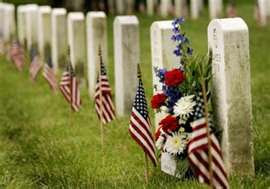
Memorial Day in America, as an annual observance, can be traced back to the end of the Civil War, a war in which over a half-million died.
Southern women scattered spring flowers on graves of both northern Union and southern Confederate soldiers.

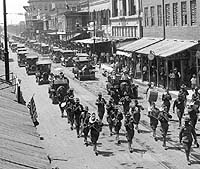
Many places claimed to have held the original Memorial Day, such as:
- Warrenton, Virginia;
- Columbus, Georgia;
- Savannah, Georgia;
- Gettysburg, Pennsylvania;
- Boalsburg, Pennsylvania;
- Waterloo, New York.
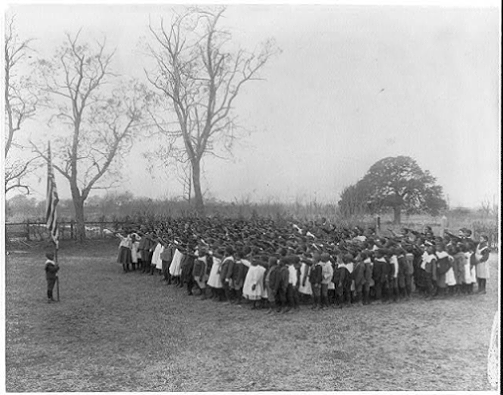
One such place was Charleston, South Carolina, where a mass grave was uncovered of 267 Union soldiers who had died in a prison camp.
On May 1, 1865, former slaves organized a parade, led by 2,800 singing black children, in which they prayed, read Bible verses, sang spirituals, and reburied the soldiers with honor as an act of gratefulness for their ultimate sacrifice which gave them freedom.
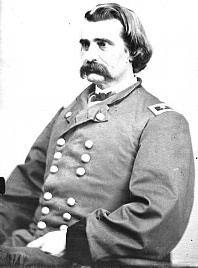
In 1868, General John A. Logan, commander of the Civil War veterans’ organization “The Grand Army of the Republic,” called for a Decoration Day to be observed annually on May 30.
An estimated 180,000 Black soldiers served in the Union Army during the Civil War.
Republican abolitionist Frederick Douglass gave a Decoration Day address at Arlington National Cemetery in 1871:
“We must never forget that the loyal soldiers who rest beneath this sod flung themselves between the nation and the nation’s destroyers.”
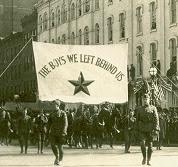
President James Garfield’s only executive order was in 1881 where he gave government workers May 30th off so they could decorate the graves of those who died in the Civil War.
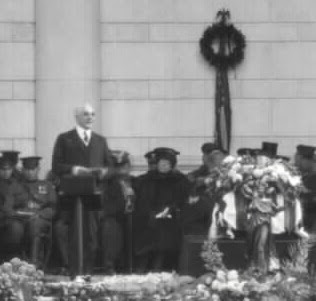
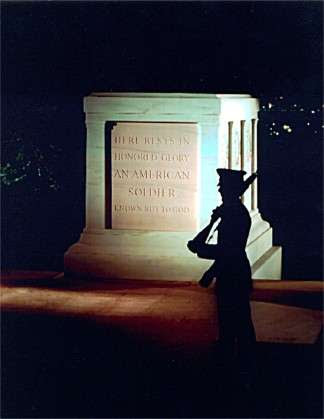
In 1921, President Warren Harding had the remains of an unknown soldier killed in France during World War I buried in the Tomb of the Unknown Soldier at Arlington Cemetery.
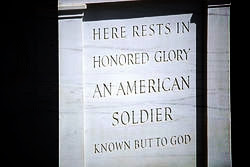
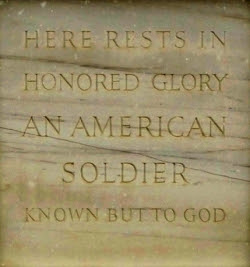
Inscribed on the Tomb is the phrase:
“HERE RESTS IN HONORED GLORY AN AMERICAN SOLDIER KNOWN BUT TO GOD.”
Since 1921, it has been the tradition for Presidents to lay a wreath on the Tomb of the Unknown Soldier, which is guarded 24 hours a day, 365 days a year.
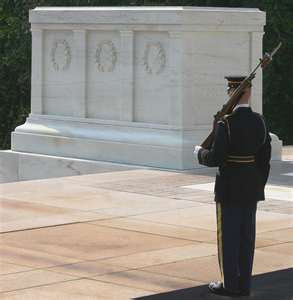
The number 21 being the highest salute, the sentry takes 21 steps, faces the tomb for 21 seconds, turns and pauses 21 seconds, then retraces his steps.
The number 21 is explained on the U.S. Army Center of Military History website (history.army.mil/index.html):
“Warriors … demonstrated their peaceful intentions placing their weapons in a position that rendered them ineffective …
Rendering a salute by cannon originated in the 14th century as firearms and cannons came into use. Since these early devices contained only one projectile, discharging them once rendered them ineffective.
Originally warships fired seven-gun salutes–the number seven probably selected because of its astrological and Biblical significance … The Bible states that God rested on the seventh day after Creation, that every seventh year was sabbatical and that the seven times seventh year ushered in the Jubilee year.
Land batteries, having a greater supply of gunpowder, were able to fire three guns for every shot fired afloat, hence the salute by shore batteries was 21 guns …
Early gunpowder, composed mainly of sodium nitrate, spoiled easily at sea, but could be kept cooler and drier in land magazines. When potassium nitrate improved the quality of gunpowder, ships at sea adopted the salute of 21 guns.
The 21-gun salute became the highest honor a nation rendered …
Great Britain, the world’s preeminent seapower in the 18th and 19th centuries, compelled weaker nations to salute first …
Eventually, by agreement, the international salute was established at 21 guns, although the United States did not agree on this procedure until August 1875.”
On Decoration Day, 1923, President Calvin Coolidge stated:
“There can be no peace with the forces of evil. Peace comes only through the establishment of the supremacy of the forces of good.
That way lies through sacrifice … ‘Greater love hath no man than this, that a man lay down his life for his friends.'”
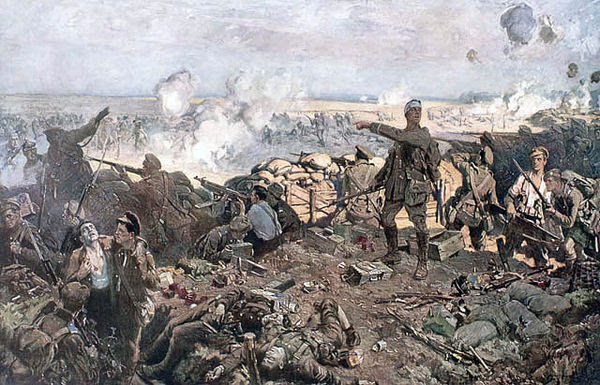
The Memorial Day poem, “In Flanders Fields,” was composed during World War I, by a Canadian Expeditionary gunner and medical officer named John McCrae, who fought in the Second Battle of Ypres near Flanders, Belgium.
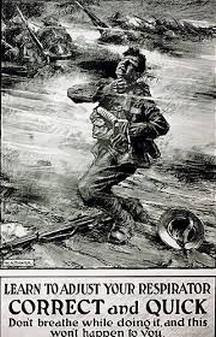
Describing the battle as a “nightmare,” as the enemy carried out one of the first chlorine gas attacks, McCrae wrote:
“For seventeen days and seventeen nights none of us have had our clothes off, nor our boots even, except occasionally. In all that time while I was awake, gunfire and rifle fire never ceased for sixty seconds …
And behind it all was the constant background of the sights of the dead, the wounded, the maimed, and a terrible anxiety lest the line should give way.”
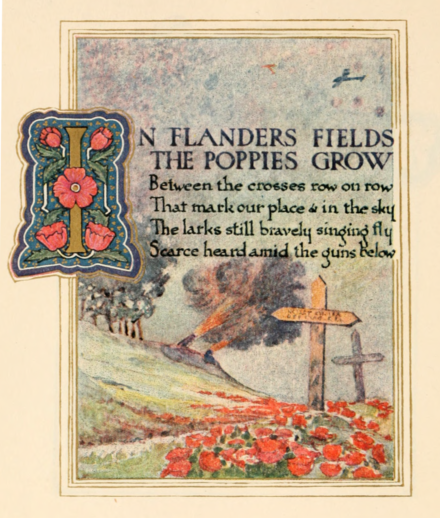
Finding one of his friends killed, McCrae helped bury him along with the other dead in a field.
Noticing the field covered with poppy flowers, he wrote:
“In Flanders fields the poppies blow
Between the crosses, row on row,
That mark our place; and in the sky
The larks, still bravely singing, fly
Scarce heard amid the guns below.
We are the Dead. Short days ago
We lived, felt dawn, saw sunset glow,
Loved and were loved, and now we lie
In Flanders fields.
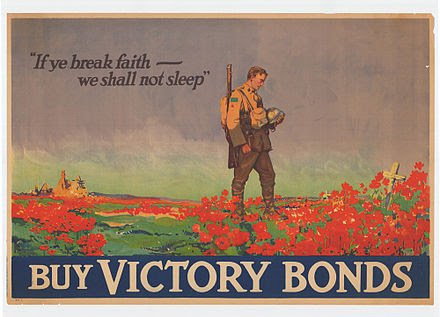
Take up our quarrel with the foe:
To you from failing hands we throw
The torch; be yours to hold it high.
If ye break faith with us who die
We shall not sleep, though poppies grow
In Flanders fields.”
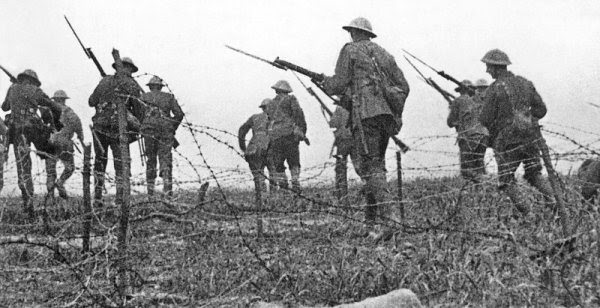
Notable individuals who fought in World War I include:
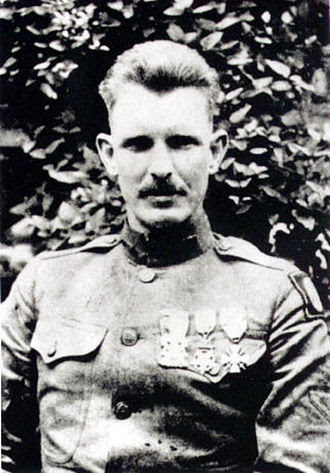
- Sergeant Alvin York, who single-handedly took out 35 machine guns and captured 132;
- John J. Pershing, General of the Armies;
- Douglas MacArthur, Brigadier General;
- George S. Patton, tank commander;
- Leonard Wood, future Army Chief of Staff;
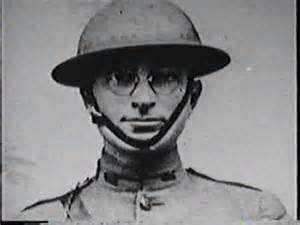
- Harry S Truman, artillery officer and future 33rd President;
- Eddie Rickenbacker, commander of 94th Areo Squadron;
- Quentin Roosevelt, a pilot, son of President Theodore Roosevelt, was shot down and died;
- Charles Whittlesey, commander of the “Lost Battalion” behind lines;
- Frank Luke -“balloon buster”;
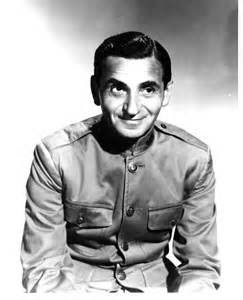
- Irving Berlin, composer of “God Bless America”;
- Edouard Izac, naval office captured on a U-Boat, who escaped;
- Henry Johnson of the “Harlem Hellfighters”;
- Dan Daly, Marine Sergeant charged and captured machine gun nests;
- Ernest Hemingway, author of A Farewell to Arms;
- J.R.R. Tolken, British author of The Lord of the Rings;
- C.S. Lewis, British author of The Chronicles of Narnia.
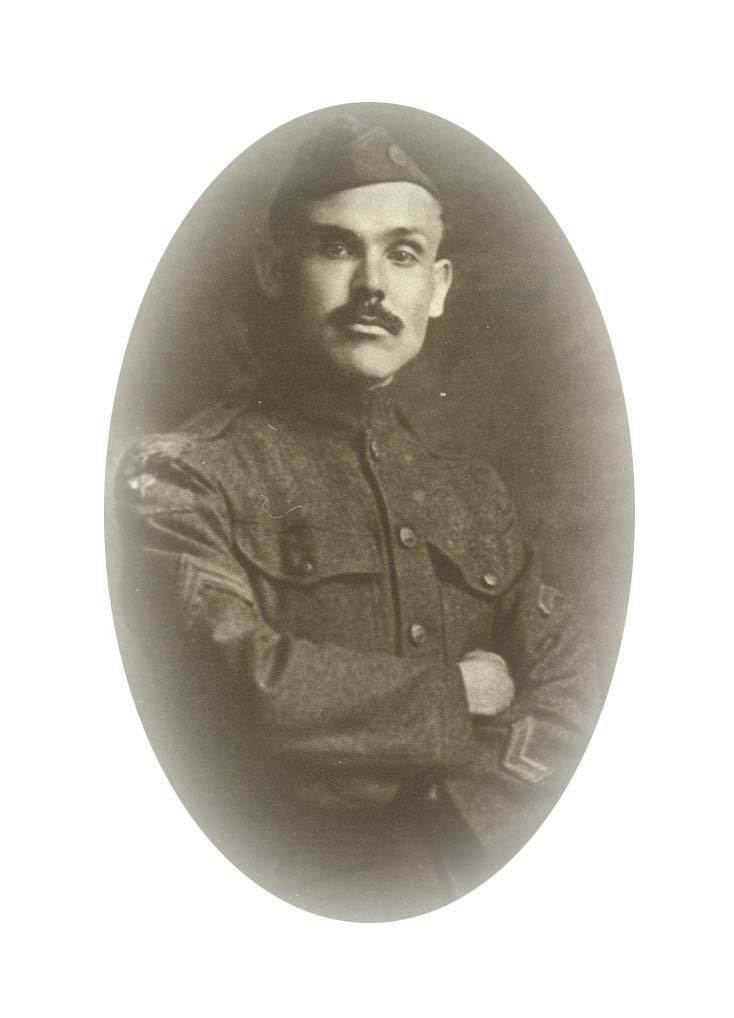
One soldier was Orval William Epperson.
Born on a rugged Ozark farm near Anderson, Missouri, he fought in France, being assigned to the 338th Machine Gun Battalion 88th Division.
Upon returning to America, he married Therese DeBrosse, and had three children: Joan, Orval Wilford, and Tirzah, the mother of the author of this article.
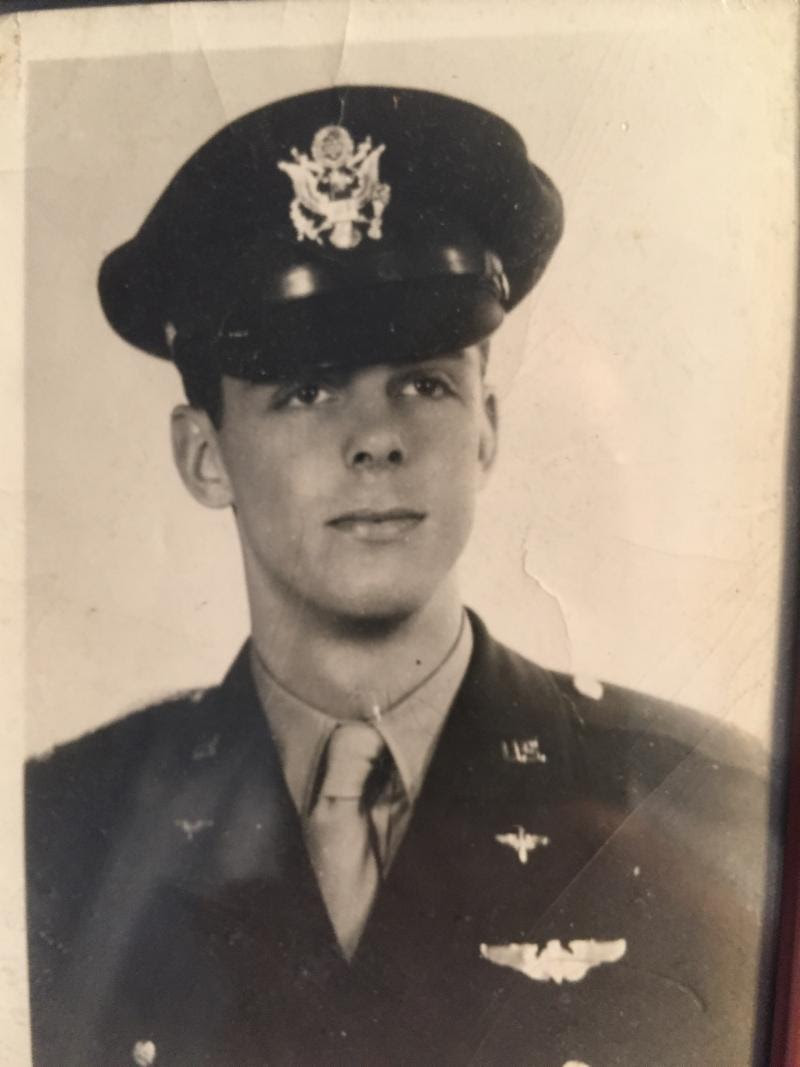
Orval and Therese’s only son was Orval Wilford “Billy” Epperson.
He served in World War II as a bombardier on a B17 Flying Fortress, 525th Squadron, 379 Bomb Group A.P.O. 550 (#0-768946).
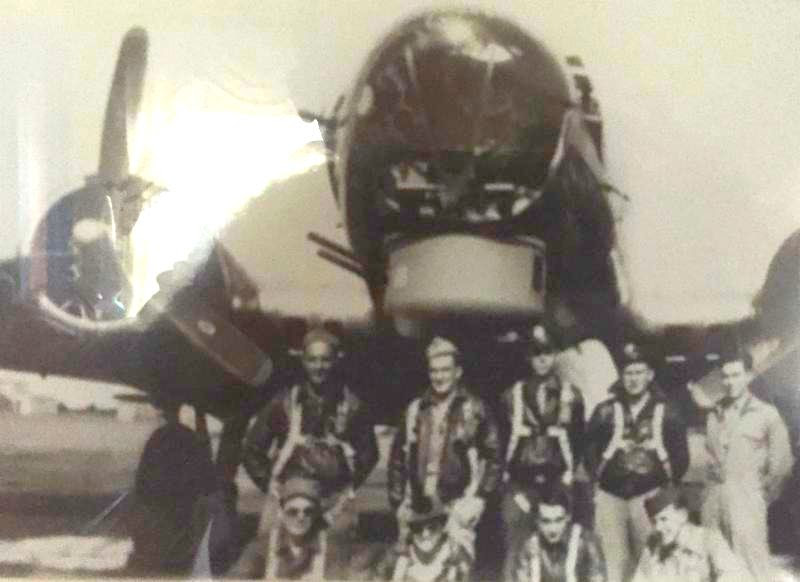
23-year-old “Billy” Epperson flew from Camp Crowder in southwest Missouri to Kimbolton, England.

He had written a Mother’s Day note to his mom, tied it with a handkerchief to a small weight and dropped it from the plane as it flew over his hometown of Neosho, Missouri.
A neighbor got it and brought to his mother, who lived at 344 S. Hamilton.

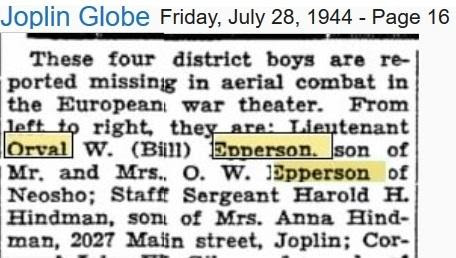
Little did either know that that would be the closest they would be again, as Billy was shot down by the Nazis over the English Channel near Holland on July 9, 1944.
His name is on the monument near Omaha Beach, at the Cimitière Amèrican de Normandie (in Colleville-sur-Mer, France) at the Killed in Action Wall (“Tablet of the Missing”).

On June 6, 1944 President Franklin Roosevelt offered a D-Day Prayer, which is now part of the World War II Memorial in Washington, D.C., thanks to the effort led by Chris Long of the Ohio Christian Alliance, as documented in his book For Their Honor:
“My fellow Americans: … I ask you to join with me in prayer:
Almighty God, Our sons, pride of our Nation, this day have set upon a mighty endeavor, a struggle to preserve our republic, our religion, and our civilization …
Give strength to their arms, stoutness to their hearts, steadfastness in their faith. They will need Thy blessings. Their road will be long and hard. For the enemy is strong. He may hurl back our forces …
We know that by Thy grace, and by the righteousness of our cause, our sons will triumph … Some will never return. Embrace these, Father, and receive them, Thy heroic servants, into Thy kingdom.”

In 1958, President Eisenhower placed soldiers in the tomb from World War II and the Korean War.
In 1968, one hundred years after the first observance, Decoration Day was moved to the last Monday in May.
In 1971, Decoration Day was renamed “Memorial Day.”
In 1984, President Ronald Reagan placed a soldier from the Vietnam War in the tomb.
DNA test later identified him as pilot Michael Blassie, whose A-37B Dragonfly was shot down near An Loc, South Vietnam.
He had graduated from the U.S. Air Force Academy in 1970, and prior to that, graduated from St. Louis University High School in 1966, ten years before the author of this article.
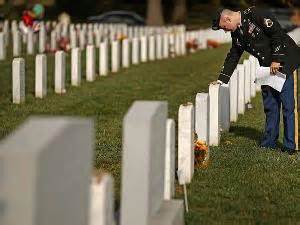
In 1998, Michael Blassie’s remains were reburied at Jefferson Memorial Cemetery, St. Louis, Missouri.
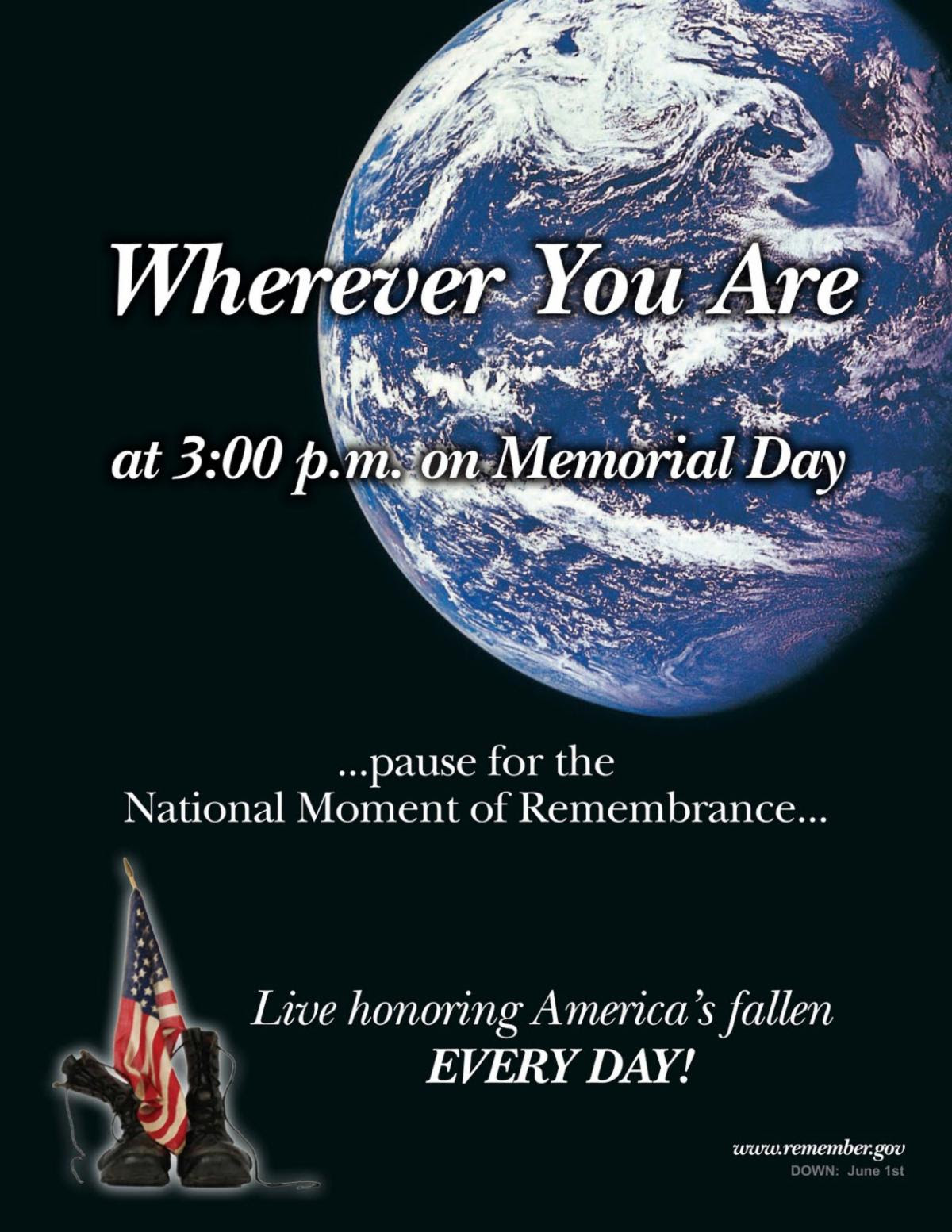
In 2000, Congress passed The National Moment of Remembrance Act (Public Law 106-579), whereby on each Memorial Day, at 3:00pm, citizens should pause for a moment of prayer:
“Congress finds that … it is essential to remember and renew the legacy of Memorial Day … to pay tribute to individuals who have made the ultimate sacrifice in service to the United States …
Greater strides must be made to demonstrate appreciation for those loyal people … whose values, represented by their sacrifices, are critical to the future of the United States …
and to encourage citizens to dedicate themselves to the … principles for which those heroes of the United States died …
A symbolic act of unity … to honor the men and women of the United States who died in the pursuit of freedom and peace … as a day of prayer for permanent peace.”
Memorial Day grew to honor over 1.3 million service men and women who gave their lives defending America’s freedom in every war, including:
- Revolutionary War (1775-1783) 25,000;
- Barbary Wars (1801-1805; 1815) 45;
- War of 1812 (1812-1814) 20,000;
- Mexican-American War (1846-1848) 13,283;
- Civil War (1861-1865) 625,000;
- Spanish-American War (1898) 2,446;
- World War 1 (1917-1918) 116,516;
- World War 2 (1941-1945) 405,399;
- Korean War (1950-1953) 36,516;
- Vietnam War (1955-1975) 58,209;
- Persian Gulf War (1990-1991) 258;
- Operation Enduring Freedom in Afghanistan (2001-2014) 2,356;
- Operation Iraqi Freedom (2003-2012) 4,489; and
- subsequent wars against Islamic terrorism, securing our borders, and in Ukraine.
At the Memorial Day Ceremony, May 31, 1993, President Bill Clinton remarked:
“The inscription on the Tomb of the Unknown Soldier says that he is ‘Known but to God.’
But that is only partly true. While the soldier’s name is known only to God, we know a lot about him.
We know he served his country, honored his community, and died for the cause of freedom. And we know that no higher praise can be assigned to any human being than those simple words …
In the presence of those buried all around us, we ask the support of all Americans in the aid and blessing of God Almighty.”
Charles Michael Province, U.S. Army, wrote the poem:
“It is the Soldier, not the minister
Who has given us freedom of religion.
It is the Soldier, not the reporter
Who has given us freedom of the press.
It is the Soldier, not the poet
Who has given us freedom of speech.
It is the Soldier, not the campus organizer
Who has given us freedom to protest.
It is the Soldier, not the lawyer
Who has given us the right to a fair trial.
It is the Soldier, not the politician
Who has given us the right to vote.
It is the Soldier who salutes the flag,
Who serves beneath the flag,
And whose coffin is draped by the flag,
Who allows the protester to burn the flag.”
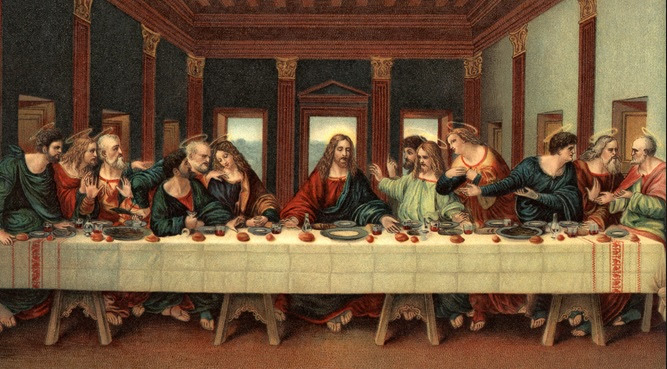
Noah Webster’s 1828 Dictionary stated in its definition of “MEMORIAL”:
“That which preserves the memory of something … A monument is a memorial of a deceased person, or of an event. The Lord’s supper is a memorial of the death and sufferings of Christ.”
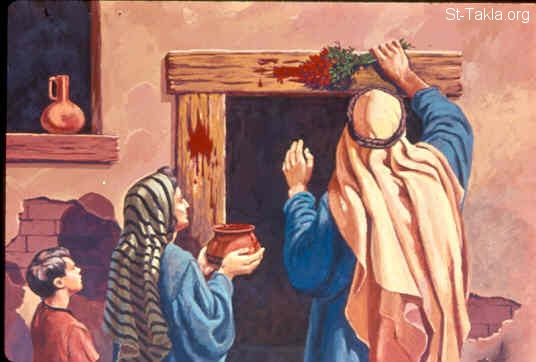
Memorials are important in Scripture. The Lord told Moses in Exodus 12:
“Speak ye unto all the congregation of Israel …
In the tenth day of this month they shall take to them every man a lamb, according to the house … Your lamb shall be without blemish … And ye shall keep it up until the fourteenth day … and the whole assembly of the congregation of Israel shall kill it in the evening.
And they shall take of the blood, and strike it on the two side posts and on the upper door post of the houses … For I will pass through the land of Egypt this night, and … execute judgment … and when I see the blood, I will pass over you, and the plague shall not be upon you to destroy you …
And this day shall be unto you for a MEMORIAL … throughout your generations … an ordinance for ever.”
Memorial is mentioned in Joshua, chapter 4:
“When all the people were clean passed over Jordan … Joshua called the twelve men … out of every tribe …
And Joshua said unto them, Pass over before the ark of the LORD your God into the midst of Jordan, and take ye up every man of you a stone upon his shoulder …
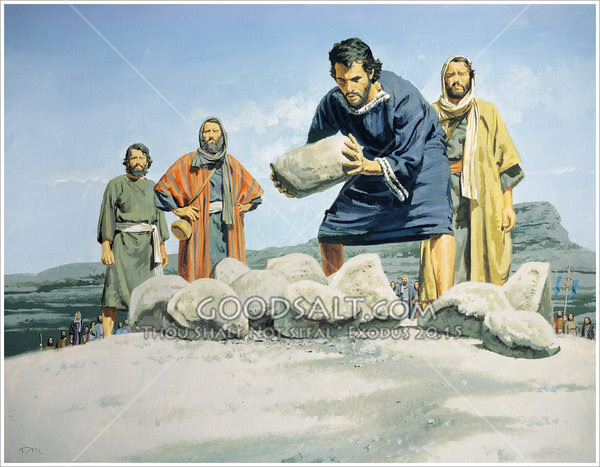
… That this may be a sign among you, that when your children ask their fathers in time to come, saying, What mean ye by these stones?
Then ye shall answer them, That the waters of Jordan were cut off before the ark of the covenant of the LORD; when it passed over Jordan … and these stones shall be for a MEMORIAL unto the children of Israel for ever.”
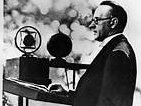
In his Memorial Day Address, May 31, 1923, President Calvin Coolidge said:
“Settlers came here from mixed motives … Generally defined, they were seeking a broader freedom.
They were intent upon establishing a Christian commonwealth in accordance to the principle of self-government …
It has been said that ‘God sifted the nations that He might send choice grain into the wilderness.'”
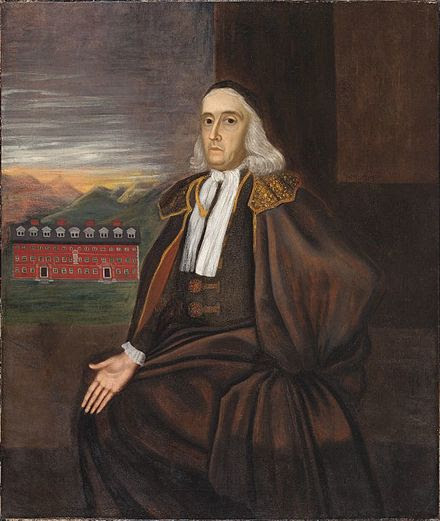
Coolidge was citing an Election Sermon given in Boston, April 29, 1669, by Massachusetts Governor Judge William Stoughton, who described the Puritans fleeing persecution in England to settle in the New World:
“God sifted a whole nation that he might send choice grain over into this wilderness.”
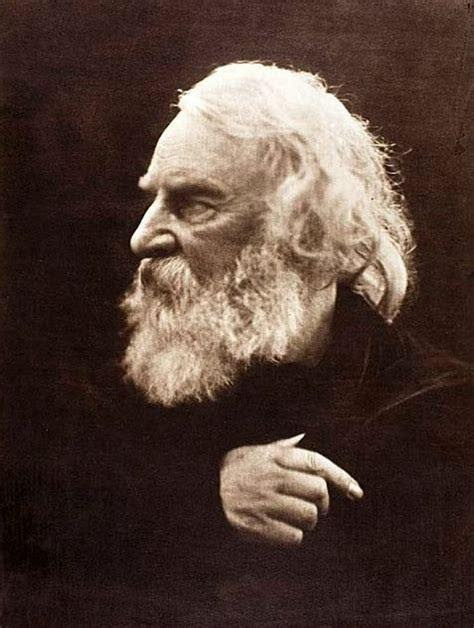
Henry W. Longfellow used a similar line in his classic Courtship of Miles Standish:
“God had sifted three kingdoms to find the wheat for this planting.”
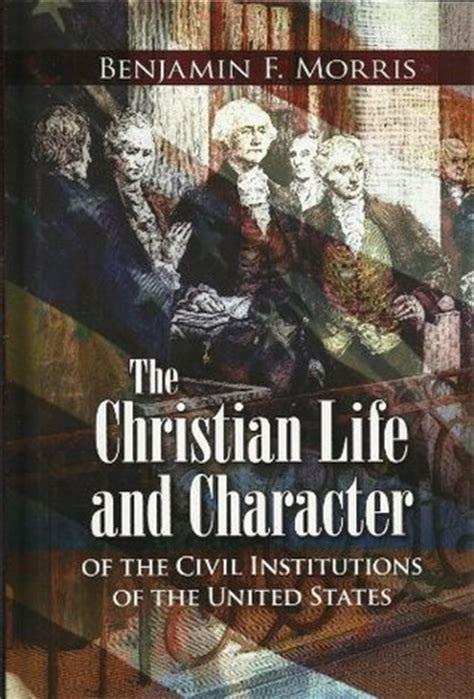
This was explained further in Benjamin Franklin Morris’ classic The Christian Life and Character of The Civil Institutions of The United States (1864):
“The persecutions of the Puritans in England for non-conformity, and the religious agitations and conflicts in Germany by Luther, in Geneva by Calvin, and in Scotland by Knox, were the preparatory ordeals for qualifying Christian men for the work of establishing the civil institutions on the American continent.
‘God sifted’ in these conflicts ‘a whole nation that He might send choice grain over into the wilderness’; and the blood and persecution of martyrs became the seed of both the church and the state …
It was in these schools of fiery trial that the founders of the American republic were educated and prepared for their grand Christian mission …
They were trained in stormy times, in order to prepare them to … establish the fundamental principles of civil and religious liberty and of just systems of civil government.”
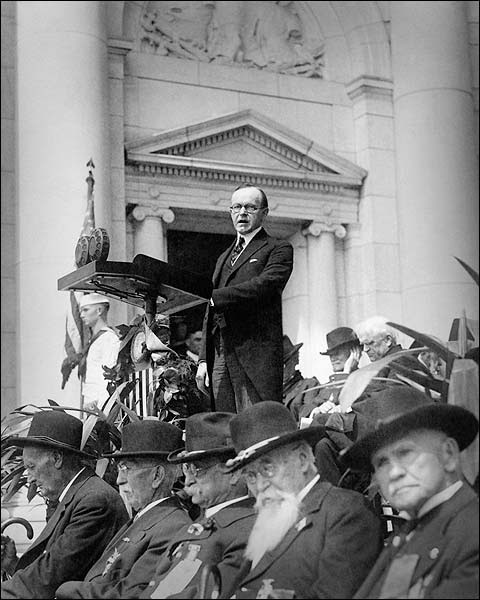
Concluding in his Memorial Day Address that America’s republic is worth preserving, President Calvin Coolidge stated May 31, 1923:
“They had a genius for organized society on the foundations of piety, righteousness, liberty, and obedience of the law …
Who can fail to see in it the hand of destiny? Who can doubt that it has been guided by a Divine Providence?”
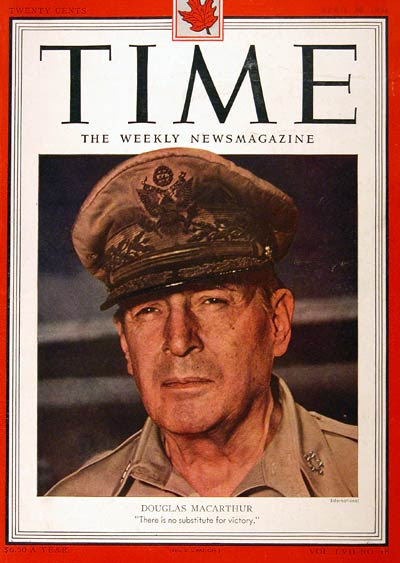
Douglas MacArthur told West Point cadets, May 1962:
“The soldier, above all other men, is required to practice the greatest act of religious training-sacrifice.
In battle and in the face of danger and death, he discloses those Divine attributes which his Maker gave when He created man in His own image …
No physical courage and no brute instinct can take the place of Divine help which alone can sustain him.
However horrible the incidents of war may be, the soldier who is called upon to offer and to give his life for his country is the noblest development of mankind.”
—
American Minute is a registered trademark of William J. Federer. Permission granted to forward, reprint, or duplicate.
—
Image Credits: Public Domain; Description: A soldier assigned to the Army’s 3rd U.S. Infantry Regiment, “The Old Guard,” guards the Tomb of the Unknowns after the U.S. Army’s senior leadership laid a wreath in tribute to the Army’s 233rd birthday at Arlington National Cemetery, Virginia; Date: June 14, 2008; Source: U.S. Department of Defense photo essay; Author: D. Myles Cullen ; This image was released by the United States Army with the ID 080614-A-0193C-015; This image is a work of a U.S. military or Department of Defense employee, taken or made as part of that person’s official duties. As a work of the U.S. federal government, the image is in the public domain in the United States; https://commons.wikimedia.org/wiki/File:Defense.gov_photo_essay_080614-A-0193C-015.jpg