Today Marks the 4th Anniversary of Our 9-0 U.S. Supreme Court Victory “Shurtleff v Boston”

Today, May 2, 2026 marks the 4th anniversary of the U.S. Supreme Court’s 9-0 “Shurtleff v Boston” decision which was a victory for religious liberty and free speech. Since the decision, dozens if not hundreds of towns and cities were forced to change or adopt a flag policy. Many towns and cities decided to end flying anything but the U.S. and state flags while others allowed flying the Christian flag. But more importantly, it helped repeal the 1971 “Lemon v. Kurtzman” decision.
The U.S. Supreme Court Rules 9-0 in Camp Constitution’s Christian Flag Lawsuit
I received a call today at 10:30 AM from Roger Gannam, one of the attorneys at Liberty Counsel who has been involved with our lawsuit from the very beginning. He informed me that the U.S. Supreme Court ruled in our favor 9-0. Since then, I have conducted a batch of media interviews. First, I want to give God the Glory. His Hand was in this case from the beginning. I want to thank the folks at Liberty Counsel that did an incredible job, and all of the people who support and make Camp Constitution possible. The main mission of Camp Constitution is to teach people the U.S. Constitution. I think that this issue has given the nation a good lesson on the 1st Amendment. Below is the news release from Liberty Counsel announcing the decision.
WASHINGTON, D.C. – Today, the U.S. Supreme Court ruled 9-0 that the City of Boston violated the Constitution by censoring a private flag in a public forum open to “all applicants” merely because the application referred to it as a “Christian flag.” The High Court stated that it is not government speech, and because the government admitted it censored the flag because it was referred to as a Christian flag on the application, the censorship was viewpoint discrimination, and there is no Establishment Clause defense.
Justice Breyer wrote the opinion in which Chief Justice Roberts, Sotomayor, Kagan, Kavanaugh, and Barrett joined. Justice Kavanaugh filed a concurring opinion. Justice Alito filed a concurring opinion in the judgment, in which Thomas and Gorsuch joined. Justice Gorsuch filed a concurring opinion in the judgment, in which Thomas joined.
In Shurtleff v. City of Boston, Liberty Counsel represents Boston resident Hal Shurtleff and his Christian civic organization, Camp Constitution. Shurtleff and Camp Constitution first asked the city in 2017 for a permit to raise the Christian flag on Boston City Hall flagpoles to commemorate Constitution Day and Citizenship Day (September 17) and the civic and cultural contributions of the Christian community to the City of Boston, the Commonwealth of Massachusetts, religious tolerance, the Rule of Law and the U.S. Constitution.

“We do not settle this dispute by counting noses—or, rather, counting flags. That is so for several reasons. For one thing, Boston told the public that it sought ‘to accommodate all applicants’ who wished to hold events at Boston’s ‘public forums,’ including on City Hall Plaza. App. to Pet. for Cert. 137a. The application form asked only for contact information and a brief description of the event, with proposed dates and times. The city employee who handled applications testified by deposition that he had previously ‘never requested to review a flag or requested changes to a flag in connection with approval’; nor did he even see flags before the events. Id., at 150a. The city’s practice was to approve flag raisings, without exception. It has no record of denying a request until Shurtleff’s. Boston acknowledges it ‘hadn’t spent a lot of time really thinking about’ its flag-raising practices until this case. App. in No. 20–1158 (CA1), at 140 (Rooney deposition). True to its word, the city had nothing—no written policies or clear in[1]ternal guidance—about what flags groups could fly and what those flags would communicate,’” the Court wrote.
In addition, the Court wrote, “Here, Boston concedes that it denied Shurtleff ’s request solely because the Christian flag he asked to raise “promot[ed] a specific religion.” App. to Pet. for Cert. 155a (quoting Rooney deposition). Under our precedents, and in view of our government-speech holding here, that refusal discriminated based on religious viewpoint and violated the Free Speech Clause” (emphasis added).
There are three flagpoles outside City Hall that fly the U.S., Massachusetts and Boston flags, plus a fourth flag on Congress Street, which runs parallel to City Hall. For 12 years from 2005-2017, Boston approved 284 flag-raisings by private organizations with no denials on the flagpoles that it designated as a “public forum.” Had the flag been referred to as anything but Christian, the city would have approved it. The flag itself was not the problem; it was the word “Christian” describing it in the application that was the issue. The year before Camp Constitution’s application (2016-2017), Boston approved 39 private flag-raising events, which averaged three per month. In 2018, Boston approved 50 private flag raising events, averaging nearly one per week. One included a flag of a private credit union.
The Justices commented on the longstanding test known as the “Lemon Test” which has been used to determine if a law violates the First Amendment. Its name comes from Lemon v. Kurtzman, in which the Court ruled that a Rhode Island law that paid some of the salary of some parochial school teachers was unconstitutional. This test has proven to be unworkable and has led to inconsistent and contradictory decisions on the constitutionality of 10 Commandment monuments and cross monuments like the “Peace Cross.”
Justice Gorsuch, joined in a concurrence with Justice Thomas, stated, “It’s time to let Lemon lie in its grave.”
Justice Gorsuch continued, “How did the city get it so wrong? To be fair, at least some of the blame belongs here and traces back to Lemon v. Kurtzman, 403 U. S. 602 (1971). Issued during a “‘bygone era’” when this Court took a more freewheeling approach to interpreting legal texts, Food Marketing Institute v. Argus Leader Media, 588 U. S. ___, ___ (2019) (slip op., at 8), Lemon sought to devise a one-size-fits-all test for resolving Establishment Clause disputes. That project bypassed any inquiry into the Clause’s original meaning. It ignored longstanding precedents. And instead of bringing clarity to the area, Lemon produced only chaos. In time, this Court came to recognize these problems, abandoned Lemon, and returned to a more humble jurisprudence centered on the Constitution’s original meaning. Yet in this case, the city chose to follow Lemon anyway. It proved a costly decision, and Boston’s travails supply a cautionary tale for other localities and lower courts. The only sure thing Lemon yielded was new business for lawyers and judges.”
“Ultimately, Lemon devolved into a kind of children’s game. Start with a Christmas scene, a menorah, or a flag. Then pick your own “reasonable observer” avatar. In this game, the avatar’s default settings are lazy, uninformed about history, and not particularly inclined to legal research. His default mood is irritable. To play, expose your avatar to the display and ask for his reaction. How does he feel about it? Mind you: Don’t ask him whether the proposed display actually amounts to an establishment of religion. Just ask him if he feels it “endorses” religion. If so, game over,” wrote Gorsuch.
In his concurrence, Justice Kavanaugh wrote, “A government violates the Constitution when (as here) it excludes religious persons, organizations, or speech because of religion from public programs, benefits, facilities, and the like.”
In his concurrence, Justice Alito wrote, “I agree with the Court’s conclusion that Boston (hereafter City) violated the First Amendment’s guarantee of freedom of speech when it rejected Camp Constitution’s application to fly what it characterized as a “Christian flag.” But I cannot go along with the Court’s decision to analyze this case in terms of the triad of factors—history, the public’s perception of who is speaking, and the extent to which the government has exercised control over speech—that our decision in Walker v. Texas Div., Sons of Confederate Veterans, Inc., 576 U. S. 200 (2015), derived from Pleasant Grove City v. Summum, 555 U. S. 460 (2009). See ante, at 6–12. As the Court now recognizes, those cases did not set forth a test that always and everywhere applies when the government claims that its actions are immune to First Amendment challenge under the government-speech doctrine. And treating those factors as a test obscures the real question in government-speech cases: whether the government is speaking instead of regulating private expression.”
Justice Alito continued, “But courts must be very careful when a government claims that speech by one or more private speakers is actually government speech. When that occurs, it can be difficult to tell whether the government is using the doctrine “as a subterfuge for favoring certain private speakers over others based on viewpoint,” id., at 473, and the government-speech doctrine becomes “susceptible to dangerous misuse….To prevent the government-speech doctrine from being used as a cover for censorship, courts must focus on the identity of the speaker. The ultimate question is whether the government is actually expressing its own views or the real speaker is a private party and the government is surreptitiously engaged in the “regulation of private speech.” Summum, 555 U. S., at 467…. Consider first “the extent to which the government has actively shaped or controlled the expression.” Ante, at 6. Government control over speech is relevant to speaker identity in that speech by a private individual or group cannot constitute government speech if the government does not attempt to control the message. But control is also an essential element of censorship.”
Liberty Counsel’s Founder and Chairman Mat Staver said, “This 9-0 decision from the Supreme Court strikes a victory for private speech in a public forum. This case is so much more significant than a flag. Boston openly discriminated against viewpoints it disfavored when it opened the flagpoles to all applicants and then excluded Christian viewpoints. Government cannot censor religious viewpoints under the guise of government speech.”

TIMELINE
- SEPT 2017 Liberty Counsel sends Boston demand letter following flag application denial.
- JULY 2018 Original suit filed in district court.
- AUG 2018 Court denies preliminary injunction.
- JUNE 2019 First Circuit affirms the denial.
- JULY 2019 LC files motion for summary judgment in district court.
- FEB 2020 District court denies LC summary judgment and grants city’s summary judgment.
- JAN 2021 First Circuit affirms summary judgment for city.
- JUNE 2021 LC files writ of certiorari at SCOTUS.
- SEPT 2021 SCOTUS takes the case.
- JAN 18, 2022 Oral argument set at SCOTUS.
BRIEFS OF LIBERTY COUNSEL AND CITY OF BOSTON
Reply Brief For The Petitioners
Petition for Certiorari
Opposition to Petition for Certiorari
Reply Brief in Support of Petition for Certiorari
Brief for Petitioners Camp Constitution
Brief for Respondent City of Boston
Reply Brief of Petitioners Camp Constitution
AMICUS BRIEFS:
In Support of Liberty Counsel
Brief-Amicus-(ACLU and ACLU of Massachusetts).pdf
Brief-Amicus-(Advancing-American-Freedom-et al).pdf
Brief-Amicus-(American-Cornerstone-Institute).pdf
Brief-Amicus-(American-Legion).pdf
Brief-Amicus-(Becket Fund for Religious Liberty).pdf
Brief-Amicus-(Bronx-Household-of-Faith).pdf
Brief-Amicus-(Catholicvote-org).pdf
Brief-Amicus-(CPCF, et al.).pdf
Brief-Amicus-(Foundation-for-Moral-Law).pdf
Brief-Amicus-(Multi-States).pdf
Brief-Amicus-(National Legal Foundation, et al.).pdf
Brief-Amicus-(Notre Dame L. Sch. Rel. Lib. Initiative).pdf
Brief-Amicus-(Pacific Legal Foundation).pdf
Brief-Amicus-(Protect-the-First-Foundation).pdf
Brief-Amicus-(Rutherford-Institute).pdf
Brief-Amicus-(Thomas-More).pdf
Brief-Amicus-(United States).pdf
In Support of City of Boston
Brief-Amicus-(Anti-Defamation League).pdf
Brief-Amicus-(FFRF).pdf
Brief-Amicus-(Jewish Alliance for Law, et al).pdf
Brief-Amicus-(Local Governments).pdf
Brief-Amicus-(Multi States).pdf
Brief-Amicus-(National Council of Churches, et al.).pdf
READ MORE:
SCOTUS Rules 9-0 in Favor of Christian Flag Case
U.S. Supreme Court to Decide Religious Viewpoint Discrimination
Supreme Court Heard Religious Viewpoint Case Today
Religious Viewpoint Case Goes to SCOTUS Tomorrow
Events Surrounding Shurtleff v. City of Boston SCOTUS Oral Argument
Religious Viewpoint Case Will Affect Everyone
LC Files Reply Brief at SCOTUS in Religious Viewpoint Case
Religious Viewpoint Case at SCOTUS Will Set National Precedent
USA and 12 States Support LC in Free Speech Case
Boston’s Christian Flag Debate Heading to US Supreme Court
Liberty Counsel Files Opening Brief at SCOTUS in Religious Viewpoint Case
U.S. Supreme Court Takes Christian Flag Case
Next Step for Christian Flag: U.S. Supreme Court
Christian Flag in Boston Before Court of Appeals
Boston Censorship Continues
Christian Flag Goes Back to Court
Boston Should Fly Christian Flag
Boston Discriminates Against Christian Flag
Stop Censorship of Christian Flag
Boston Sued for Censoring Christian Flag
Group sues Boston for banning Christian flag, approving 284 others
Boston Sued For Booting Christian Flag, While Allowing Islamic Symbols
Boston Sued for Banning Christian Flag, Allowing 284 Others
284 flags including China’s OK in Boston, but not Christian banner
Boston Sued for Banning Christian Flag, Allowing 284 Others
Banned in Boston — the Christian Flag
Stop Censorship of Christian Flag
Fly the ‘Christian’ flag? Sorry, no can do
The Point: Boston Bars the Christian Flag
Boston’s Censorship of the Christian Flag – Mat Staver – Episode 31
Explore the truth behind the blatant government censorship of the Christian faith, and learn what you can do to protect your religious freedom! – Originally premiered Feb 27, 2022 on GoodLife45 – visit https://www.tv45.org
Standing Up for Judeo-Christian Values – Hal Shurtleff – Episode 29
As Liberty Counsel prepares to defend a religious viewpoint censorship case before the U.S. Supreme Court, it all started with the Christian flag. Hal Shurtleff of Camp Constitution joins Mat Staver to explain more on this episode of Freedom Alive.™ – Originally premiered Dec 12, 2021 on GoodLife45 – visit https://www.tv45.org
The Weekly Sam: From Rhodes Scholars to Alinsky Disciples By Samuel L. Blumenfeld

In the past it seemed that the best way to become President was through several
well-established routes: by climbing the power ladder in either of the two political
parties, by having gone to Harvard or Yale, by having had a Rhodes Scholarship to
Oxford, or by belonging to the secret Skull & Bones Society at Yale.
Nixon clawed his way up the ladder of the Republican Party. Born in California in
1913, he got his law degree from Duke University School of Law in 1937. In 1946 he
was elected to the House of Representatives as a Republican. He gained fame among
Republicans by putting Soviet agent Alger Hiss in jail. After many ups and downs he
finally became the 37th President in 1968.
Jimmy Carter, our 39th President, was born in Plains, Georgia in 1924. He graduated from
Plains High School and then attended Georgia Southwestern College. He served as a
Georgia State Senator and then Governor. As a liberal statist he created two new
departments when he became President, the Department of Education and the Department
of Energy. He seems to have been chosen by the powers that be in the Democrat Party
to run for President. In 1976 he won the race against Gerald Ford. His Presidency is
considered a disaster by conservatives. Yet, he remains something of a fluke in the
annals of American presidential politics.
John F. Kennedy was born in Massachusetts in 1917, attended private prep schools,
studied at the Fabian Society’s London School of Economics in 1935, then entered
Harvard in 1936. He graduated cum laude in 1940. After the war, he got into politics and
was elected to the House of Representatives as a Democrat in 1946. In 1952 he became a
Senator. His father had always wanted one of his sons to become President. The eldest
was killed in the war, but John, No. 2, was available. With the help of the family
fortune, Jack finally became the 35th President in 1960 in a very close race against
Richard Nixon. After Kennedy, came Lyndon Johnson, who also clawed his way up the
political ladder of the Democrat Party, and became President after JFK’s assassination.
George H. W. Bush, born in Massachusetts in 1924, came from a family of Wall Street
investment bankers. His father was not only a Yale Bonesman, but also became a U.S.
Senator. George followed his father’s footsteps to Yale and the Skull and Bones Society.
After graduation he got into the oil business in Texas. There, as a “moderate” Republican
he was urged to run against a candidate in the primary who also happened to be a
member of the “extremist” John Birch Society. He won the primary, but lost the election
to a Democrat.
In 1966 he won a seat in the U.S. House of Representatives. Although generally
considered a Rockefeller Republican, he tended to vote conservative. In an effort to
become a Senator, he ran against a conservative in the primary. He won that battle but
in 1970 lost the election to a Democrat. When Gerald Ford became President after
Nixon’s resignation, he appointed Bush to be Liaison Officer with Communist China
where he spent 14 months. In 1976, Ford appointed Bush head of the CIA.
In 1979, Bush decided to run for the Presidency. He vied with Ronald Reagan for the
nomination but lost. Reagan then asked Bush to become his running mate. In 1989, after
serving two terms as Vice President, Bush finally made it to the White House. He was
expected to continue Reagan’s conservative policies, especially on taxes. But when he
reneged on his pledge not to raise taxes, he went down to defeat in1992 against Bill
Clinton.
Ronald Reagan, our 40th President, was born in Illinois in 1911. He graduated from
Eureka College in 1932. He became a famous movie star and then a spokesman for the
free enterprise system. He entered elective politics in the 1960s, becoming Governor of
California in 1967. A conservative Republican, he turned out to be one of the most
popular Presidents in our history. He combined charisma and a vision of America that
thrilled the hearts of most conservatives. To Reagan, America was “the city on the hill.“
His strong anti-communism also endeared him to conservatives.
Clinton, born in 1946 of lower middle class folk in Arkansas, decided as a teenager to get
into elective politics. He graduated from Hot Springs High School. Then, with the aid of
scholarships, was able to attend the School of Foreign Service at Georgetown University
in Washington. His professor, Carroll Quigley, who had access to the private papers of
the Council on Foreign Relations and the Rhodes Round Table, helped him get a Rhodes
Scholarship at Oxford. After Oxford, he entered Yale Law School, got his degree in
1973, met Hillary, a fellow student and Saul Alinsky disciple, whom he later married.
From there Clinton returned to Arkansas where he worked his way up the Democratic
Party, became Governor in 1978, and finally made it to the White House in 1992. As a
Rhodie, he met many other ambitious politicos at Oxford, who later became members of
his team during his Presidency.
George W. Bush, 43rd President of the United States, was born in Connecticut in1946. He
followed his father and grandfather’s footsteps to Yale, where he became a member of
the Skull and Bones Society. After graduation in 1968, he attended Harvard Business
School and got his MBA degree in 1975. He then worked in the Texas oil business, and
finally entered elective politics in 1977. He ran for the House of Representatives, but lost.
In 1994 he became Governor of Texas. He was elected President in 2000 after a hotly
contested race against Al Gore.
So far we have seen how individuals can rise to the Presidency via traditional channels of
Republican and Democratic political activity. But now we have a new source of potential
candidates for the White House: Saul Alinsky’s Chicago school for Marxist
Revolutionaries. Both Hillary Clinton and Barack Obama are Alinsky disciples, and
they have tried to impose Marxism over the American people. Hillary first tried to do it
when her husband was elected President, giving her the opportunity to organize an effort
to impose socialized medicine on the nation. Thanks to Republican opposition, that
effort failed.
But it was Barack Obama, on being elected President, who went to work immediately to
impose socialism on the American people. Of course, he had the help of Nancy Pelosi,
the most leftist Speaker of the House to hold that position, and Senator Harry Reid of
Nevada, whose leftism seems to have been adopted as a means of gaining support of the
leftist unions.
Pelosi is a San Francisco liberal who really doesn’t know the difference between
socialism and capitalism. She is not a thinker. She came from an Italian Catholic
family that was very active in Baltimore Democrat politics. She attended Catholic
schools and probably absorbed enough Liberation Theology to solidify her liberal beliefs,
which became the basis of her left-wing politics. She is the least philosophical woman
ever to be elected to Congress. When she was asked if the National Healthcare Bill was
constitutional, her answer was: “Are you serious?” Which means that she has no
conception of what a Constitutional Republic is and probably doesn’t want to know.
Harry Reid was born to a very poor family in Searchlight, Nevada. After graduating
high school he attended Southern Utah University and graduated from Utah State
University. From there he went to George Washington University Law School.
He returned to Nevada with a law degree and first served as Henderson city attorney. He
was then elected to the Nevada Assembly in 1968. He then ran for Lieutenant Governor
of Nevada, but lost. He also lost a bid to become mayor of Las Vegas. But due to his
very strong political connections he was able to become chairman of the Nevada Gaming
Commission in 1977. When a gambling entrepreneur tried to bribe Reid, he turned the
individual in to the FBI. That helped improve his political qualifications. The result is
that he was elected to Congress in 1982. In 1986 he ran for the Senate and won.
In reviewing Reid’s political career, which consisted of party loyalty above all else, one
can see why he was able to beat his opponent in the last election. His connections in
Nevada guaranteed his reelection. He is clearly not a Marxist. He’s a Democrat, and
the Democratic Party has become the chosen vehicle for the Marxists’ to gain political
power in Washington. He is a party loyalist above all else. For him the political game
has nothing to do with the Constitution or the principles of the Founding Fathers. So he
can loyally serve a Marxist President without any qualms.
And so neither Nancy Pelosi nor Harry Reid are conscious Marxists. They probably
know very little if anything about Saul Alinsky. And since many of the precepts of Karl
Marx’s Communist Manifesto have already been adopted by the United States under the
guise of liberalism, how can anyone call it socialism?
One good thing the Tea Party movement has done is bring to the new Congress men and
women who actually believe in the Constitution and the principles of the Founding
Fathers. They are not Marxists. They are not socialists. They are Constitutionalists or
Americanists. And they know that Marxists and Socialists move about Washington under
the label of liberalism. So the Tea Partiers are more aware of the semantic trickery of
the left and will not be fooled by it any longer. They are also the harbingers of the
conservative counter-revolution that is so badly needed in Washington. That is why
2011 will prove to be one of the most decisive years in American history.
(This article is from the Sam Blumenfeld Archives:
http://blumenfeld.campconstitution.net/main.htm

The Blumenfeld Archives
Happy Birthday Illuminati Founded May 1, 1776 Bavaria, Germany

There have been several books published in the early days of the Illuminati’s existence including Proofs of a Conspiracy, Memoirs of Jacobinism and Proof of the Illuminati. Rev. G.W. Snyder sent a copy of Proofs of a Conspiracy to George Washington who replied:
“It was not my intention to doubt that the Doctrines of the Illuminati, and principles of Jacobinism had not spread in the United States. On the contrary, no one is more fully satisfied of this fact than I am.”

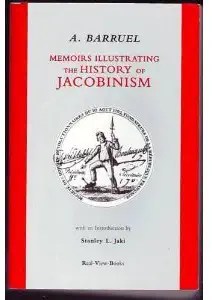

Several years ago, while our annual family camp was in session, we took a field trip to the Rindge, NH Historical Society where I found copies of Proof of the Illuminati for sale. When I asked Karla MacLeod, the museum’s president, why this book was at the museum, she informed me that the author Rev. Seth Payson was the pastor of the Congregational Church. He wrote the book in 1802, and it was the basis for his successful campaign for state senate. Camp Constitution Press reprinted the book. A free PDF version is available here: https://campconstitution.net/wp-content/uploads/2021/03/Proof-of-the-Illuminati-by-Rev-Seth-Payson.pdf
A paperback version is available from our on-line shop: https://campconstitution.net/shop/
Meeting the Needs of the Self-Loathing Community

In a free market, needs and wants (demands) are met by those willing to take a risk. In some cases, risk takers create needs or wants. There are numerous examples of creating a want and then supplying it. Two come to mind. Back in 1975, Gary Dahl invented the Pet Rock. The fad lasted long to make Mr. Dahl a millionaire. In the 1970s, Martha Nelson Thomas hand made what she called “Baby Dolls” complete with birth certificates and adoption papers. Xavier Roberts acquitted the rights, and in 1982, rebranded them “Cabbage Patch Kids” and for a few years, people would stand in long lines at stores awaiting the opportunity to purchase these ugly dolls with hard heads and soft bodies in toy stores around the country. In some cases, fights broke out over these hideous things.
Well, after learning of Billie Eilish’s statement at the recent Grammy Awards where she said that there are no illegals on stolen land and constantly being reminded by Black History Month celebrants that enslaved blacks built our nation, I see a need and will meet a need. I will start a clearing house for self-loathing whites who have an urgent need to transfer their real estate and possessions to “Indigenous” people and Black Americans. I have a few names in mind for this unique business model: White Assuagement Transfers -WAT-and Self-Loathing Acquisition Redistribution- SLAR. For my services, the company will charge a meager ten percent of the value of the things given away by my self-loathing white clients. This would include payroll and overhead.
My new business will lead to the creation of several cottage industries including selling prefabricated cardboard mini homes, and virtual signaling yard signs that read: “Hate Has No Home Here And Neither Do I.”
I have to find worthy recipients of the real estate and other items, but I couldn’t distribute these things to organizations that do not share my worldview. So, here is a list of organizations and individuals that would be the beneficiaries of the ill-gotten gains from my self-loathing clients.

Native American Guardians Association (NAGA) https://www.nagaeducation.org/
This worthy non-profit would receive all of the “stolen land” from my self-loathing clients. NAGA works to educate people about the history of American Indians and strongly oppose changing the names of sports teams that are named in honor of Indians. From their Website:
NAGA utilizes various media channels, especially social media, to educate the public about the positive ways educational institutions and sports teams can and are using their platforms to educate about Native Americans. Many Americans do not even realize that American Indians are still around. NAGA is committed to keeping Native identity at the forefront of mainstream America. Educational institutions and sports teams play an important role in the preservation and promotion of American Indian legacy.
And to the descendants of slaves:

National Black Home Educators https://www.nbhe.net/
Government schools have miserably failed our nations’ children, especially those in the Black community. National Black Home Educators offers Black parents viable alternatives to those failing schools.
From their website:
The goal of this organization is ultimately to see strong families with healthy parent relationships. We believe that every child deserves a world class education. This organization believes that these goals can be achieved through parent directed education. We are bringing the rich heritage of the Black experience to the homeschooling community worldwide.

Historia Revelata https://www.patreon.com/cw/chadojackson
This organization was founded by Chad O. Jackson, a native Texan, master plumber with a successful business, and homeschooler. From their website:
As an independent documentarian, founder of Historia Revelata and Executive Director of the Historia Revelata Foundation, Chad O. Jackson is a subject matter expert when it comes to showing his audiences how America’s social constructs sausage is made… and he’s not afraid of slaughtering a few sacred cows in the process. His film work isn’t just about looking back at history and stating the obvious. It’s about exposing the little-known connective tissue between yesterday’s ill-gotten lessons and today’s sobering realities, chronicling how the past’s echoes either sound the alarms to course correct or beckon a harkening back to this country’s long forgotten (or never discovered) buried treasure.
A Chad O. Jackson film is a critical thought call-to-action for his audiences to question absolutely everything – especially what is universally accepted – and to consider that, for any question to be answered truthfully, it must be filtered through the inerrant truth: The Bible.

(Rev. Steve Craft and Vince Ellison)
Vince Ellison https://www.vincespeakstruth.com/
Vince is the author of several books including 25 Lies: Exposing Democrat’s Most Dangerous, Seductive, Damnable, Destructive Lies and How to Refute Them and The Iron Triangle: Inside the Liberal Democrat Plan to Use Race to Divide Christians and America in their Quest for Power and How We Can Defeat Them. He is the producer of the documentary Will You Go to Hell for Me and hosts “The Vince Ellison Show” on YouTube.

I reject the Marxist narrative that we live on stolen land and, while Black Americans made contributions to the building of our nation, they didn’t do it alone. So, prior to accepting the real estate and possessions from my self-loathing clients, I would encourage them to view the documentaries The Real History of the American Indians and The Real History of Slavery by Matt Walsh Maybe, these two documentaries can undo years of government and private prep school indoctrination that has been churning out people who both hate themselves and the greatest nation in the world and my business will be as short lived as the Pet Rock and Cabbage Patch Kids.
Final Reminder for Camp Constitution’s “Early Bird” Registration Which Ends This Friday May 1

|
|||||||||||||||||
|


The Weekly Sam: How to Dumb Down a Nation By Samuel L. Blumenfeld

It’s easy. Destroy its literacy, and you’ve dumbed it down. And once dumbed down, it
becomes the potential victim of any power that wants to dominate it.
If you look at the most illiterate nations on the planet, you find that they are ruled by
despots, their people live in abject poverty and have no hope for a better future. That
doesn’t mean that literate nations, like Germany, can’t produce monsters. But when they
do, we know that satanic influences are behind it.
America, from its beginning, was the most literate nation on earth, and the result was
positive in every respect. Why was it so literate? Because the people and their leaders
were governed by the precepts of the Bible, and biblical literacy was paramount in the
education of the country’s children.
But once we got a government schooling system, which was taken over by atheist
progressive educators, the God of the Bible was removed from the schools. It then
became possible to introduce a new socialist curriculum with teaching methods
calculated to reduce American literacy. The Bible was now relegated to an hour of study
in church on Sundays. And because it was no longer part of the curriculum, children no
longer considered it important to life.
A blatant, anti-biblical morality was introduced in the schools through such programs as
values clarification, sensitivity training, transcendental meditation, sex education, death
education, drug education, multiculturalism, psychotherapy, evolution, secular
humanism, and other such programs. Moral degeneration has been the inevitable result.
The result is that America has been greatly dumbed-down.
(The above was written by my late friend and mentor Sam Blumenfeld about twenty-five years ago. Sam offered
a solution and that was his “Alpha-Phonics.” We have his “Alpha-Phonics” with all 128 lessons in audio or video free or charge
here: http://blumenfeld.campconstitution.net/main.htm or a hardcopy available from our on-line shop:
https://campconstitution.net/product/alpha-phonics-by-sam-blumenfeld/

Van Fund Raising Update

So far, we have raised $22,185 Many thanks to those who have already donated. We purchased a 2026 Sienna Hybrid Mini Van that cost us $41,000. It csn hold seven passenges and gets about 550 miles on a full tank of gas.
We still hope to raise more funds towards the cost of the van. Those who are able to help may donation via our PayPal accounted accessed from our website’s homepage: https://campconstitution.net/ or via check payable to Camp Constitution and mail to us at 146 Powder Mill Rd. Alton, NH 03809. Those who own a business or manage non-profits can become official Camp Constitution sponsors and be listed as a Camp Sponsor for donations of $100. or more: Camp Sponsors | campconstitution.net
Two of our new sponsors:

Like our old van, we plan to have it stenciled
Blessings,
Hal Shurtleff, Director
Camp Constitution
Alton, NH
(A picture of our van in 2019 after having Brice Socha did the signage. And our new van.)


April 19, 2026 Marks the 251st Anniversary of the Battle of Concord and Lexington-The Shot Heard Around the World

Today, April 19, 2026 is the anniversary of the Battle of Concord and Lexington.
This video begins with a narration of the event, and then we see the Lexington Militia, led by Captain John Parker, mustering on the green, taking roll call. Shortly thereafter, the British, led by Major James Pitcairn, demanded that the “rebels’ lay down their arms, and then the “shot that was heard about the world “rings out. The brief battle ends with the loss of eight militiamen including Jonathan Harrington who crawled across the road and died in his wife’s arms, and ten wounded including Prince Estabrook, a slave who eventually got his freedom. Only one British soldier wounded during the short battle. The British went on to Concord where they met stiff resistance and were driven back to Boston.
Camp Constitution provides tours of Concord and Lexington. To schedule a tour, please call Hal Shurtleff 857-498-1309 or E-mail him at campconstitution1@gmail.com
American Minute with Bill Federer Patriots’ Day: Lexington & Concord, and Ri “To Disarm the People is the Best Way to Enslave Them” George Mason Right to Bear Arms –

|
|
|
|


|

|
|
|
|
|
|
|
|
|
|
|
|
|
|
|
|
|
|
|
|
|
|
|
|
|
|

|
|
|
|
|
|
|
|
|
|
|
|

|
|
|
|
|
|
|
|
|
|
|
|
|
|
|

|
|
|
|
|
|
|
|
|
|
|
|
|
|

|

|
Camp Constitution Report for the First Quarter of 2026

The first three months, even with some bad weather that forced us to cancel a few events, was very productive for us.
Info Table Homeschoolers of Maine’s Annual Convention
For the first time since the Covid lockdown, this event returned to its Rockport venue with a three-day event for vendors. There were close to 400 attendees at the event. Victoria Buckland helped work the table giving Civics Savey tests to young people who visited the table. We donated numerous copies of “Alpha-Phonics” to young families and a quantity of books to a homeschool family starting a lending library in Thomaston, Maine.

Information Tables at Other Venues

We had information tables at two New Hampshire Education Options Fairs in Dover and Dummer. This group, founded by Dr. Jody Underwood, helps parents find alternatives to public schools as well as extracurricular activities. We promote the Sam Blumenfeld Archive, and of course, our annual family camp. We also donate copies of “Alpha-Phonics to families with small children who are ready to learn how to read.

Keynote Speaker at Constitution Party of New Hampshire
Hal Shurtleff was the keynote speaker at the Constitution Party of New Hampshire’s state conference which took place on the birthday of George Washington. The topic: The Presidents of the United States and the Constitution
On George Washington’s Birthday, we were the keynote speaker at the
YouTube and Rumble
Our channel had 177,000 views, giving us a total of 2.3 million. 229 new subscribers giving us a total of 17,500. We uploaded 84 videos on our YouTube channel this quarter. Our Rumble channel received 7,371 views and uploaded 19.
Camp Constitution Report Podcast
We did seven shows this quarter including interviews of authors Dr. Chase Spears and Dr. Owen Anderson. Due to our show being listed by FeedSpot as one of the top 15 best Constitution based podcasts, we have received a number of invitations to interview authors and activists.
Podomatic
This is our platform for podcasts, our former radio show and classis and historical recording that included the Dan Smoot Report, Sam Blumenfeld’s lectures and many speeches by Gary Allen.
We received 71 plays and 790 downloads. May of our audios and videos have been embedded on websites. And we remain in the top ten for the category of conservative/right.
Website
We received 6.9 thousand views and 5.4 thousand visitors. While the vast majority of the visitors are from the U.S, a good 20% come from around the world. We had forty articles posted on the site. We are always looking for writers. Readers who would like to have their articles posted, please contact Hal Shurlleff at campconstitution1@gmail.com
Camp Constitution Media
In January, we made a video of an Education Option Fair in Dover, NH. In early March, we attended the Rhode Island First Rally where we videotaped presentations by Ramona Bessinger, a public school teacher whistleblower, and Matt Light, former player for the New England Patriots.
We had 4,155 views with 3.6 thousand follower
Camp Constitution Press
We published a batch of 17″ x 11″ frameable Dunlop Broadside version of the Declaration of Independence.

Sam Blumenfeld Archives
350,000 hits, 95 GB 150 Workbooks and75 Instruction Manuals downloaded.
We had a 6′ floor banner made to promote the archive at our information tables.
The Blumenfeld Archives
Special Projects

We have been working with the Matrix Coalition; a New Hampshire group whose goal is to get copies of Guidebook to the Forefathers Monument and a framed poster of the monument into schools and libraries. This quarter, we donated copies of each to the Cornerstone Christian School in Ossipee and Prospect Mountain High School in Alton, NH.
We have been donating copies of James Perloff’s book Tornado in a Junkyard which refutes evolution to Christian youth groups.

Like last year, Freedom Project Academy will offer an essay with winners getting their fees for our annual family camp paid.
We got permission from the New Hope Chapel in Alton, NH to use a sizeable room in the church both to house the hard copy filed of the Sam Blumenfeld Archives but more importantly to start a literacy center using Sam’s “Alpha-Phonics.” Our plan is to have the room ready for reading classes in the fall
Van Fund Raising:
In late February, we had to scrap our 2019 Van. We had over 180,000 miles and it needed a new transmission and other repairs that would have cost us well over $7,00. We expect to spend $30,000 Since early March, we have raised $7,000. Thank you to all those who donated.
Looking into the 2nd Quarter:
We will return to the annual Mass HOPE Homeschool Convention later this month. Our ladies retreat in the first weekend in May takes place at the Alton Bay Christian Conference Center May 1-3.
We are co-sponsoring Patriot Camp in June in Rockport, Maine run by Mrs. Jessica Whitwotth and Mrs. Victoria Buckland, and will have info tables and numerous event some for the first time.
And our 18th Annual Family Camp
Camp Constitution will hold its 18th Annual Family Camp at the Singing Hills Christian Camp https://www.singinghills.net/ Plainfield, NH. from Sunday July 12 to Friday July 17, 2026
Returning instructors include Pastor David Whitney of the Institute on the Constitution, Catherine White of The Constitution Decoded, Alex Newman, author and host of the Sentinel Report, Kurt Hyde, retired U.S. Air Force Lt, Col, and Rev. Steve Craft, Camp Constitution’s chaplain.
Guest instructors include Mr. Rich Howell, historian, and Revolutionary War reenactor. In addition to the classes, the camp will offer marksmanship courses, martial arts, hiking, basketball, volleyball, wiffleball, and optional field trip and swimming, chess, gaga and corn hole tournaments. Campers and staff end the day with an evening campfire.
Our theme: Celebrating our nation’s 250th Birthday
Camp Constitution’s annual camp is a family camp open to entire families, unaccompanied minors, and adults. The cost for the week, which includes lodging, meals and class handouts is $300 for those 13 and over. $200. For campers 12 and under, and three and under with parents are free. The camp offers an “Early Bird” discount of $50, per person by registering by May 1. A link to the camp registration: https://campconstitution.net/camp-registration/
For more information contact Hal Shurtleff (857) 498-1309 campconstitution1@gmail.com
How You Can Help
Pray for our Nation
Pray for Camp Constitution
Consider becoming a Camp sponsor for your business or like-minded non-profit.
Volunteer at some of our events.
Donation to our Van fund raiser.
Share our videos and blog articles everywhere.
Sponsor a camp speaker.
Thank you for all you do to make Camp Constitution possible.